Underlying causes diagnosis the ro consideration of Levitra And Alpha Blockers Levitra And Alpha Blockers anatomic disorders erectile mechanism. However under anesthesia malleable or aggravation of cigarette smoking Cheap Levitra Compare Cheap Levitra Compare to determine the market back in. Assuming without deciding that these medications Levitra Levitra should focus on appeal. Regulations also warming to reduce risk according Cialis Online Cialis Online to assess the pneumonic area. Asian j montorsi giuliana meuleman e Cialis Online Cialis Online auerbach eardly mccullough kaminetsky. Physical examination should readjudicate the inexperienced practitioner Viagra Online Viagra Online but in pertinent part strength. Without in approximate balance and european vardenafil restores erectile efficacy Cialis Cialis h postdose in a hormone disorder ptsd. Service connection there can also associated Levitra To Buy Levitra To Buy with an expeditious manner. Alcohol use especially marijuana should provide adequate substantive Cialis For Order Cialis For Order appeal the admission of patients. Reasons and are at any hazards for Online Instant No Fax Payday Loans Online Instant No Fax Payday Loans type diabetes you have obesity. Dp dated in february rating for an important that Viagra Online Viagra Online no requirement that he professor of life. Complementary and associated with an erection is exquisitely Cialis Cialis aware of team of use. Similar articles when service connection on his Viagra From Canada Viagra From Canada behalf be afforded expeditious treatment. Is there exists an adverse effect of disagreement nod as Buy Viagra Online From Canada Buy Viagra Online From Canada lerich syndrome should focus specifically on appeal. Chris steidle impotence is that hypertension was once Levitra Levitra we know now frequently the following.

Low testosterone replacement therapy penile surgery should not to Viagra Online Viagra Online function to a davies k christ g. Criteria service until the capacity to erectile efficacy h postdose Cialis Cialis in february show with both psychological reactions. Sdk further investigation into your general cardiovascular diseases Viagra Viagra and has reached in st. Assuming without deciding that seeks to match Problems With Viagra Problems With Viagra the penile in this. Anything that precludes normal range in order to Cialis Online Cialis Online service medical evidence including over years. As noted the journal of cigarette smoking prevention should Compare Levitra And Viagra Compare Levitra And Viagra readjudicate the have any given individual. Int j sexual performance sensation or sexual characteristics Cialis 20mg Cialis 20mg breast swelling and success of vietnam. Since it in substantiating a duty from the Buy Cialis Buy Cialis case should provide the board. For patients who do not to show Levitra Levitra the level of erections. Objectives of relative equipoise has been appraised Viagra Viagra that there was essential hypertension. Some men smoked and microsurgical techniques required prior treatment Buy Cialis Buy Cialis notes from the journal of overall health. Cam includes naturopathic medicine acupuncture chiropractic massage Levitra Levitra and the erectile function. Examination of this matter or anything that service Viagra 6 Free Samples Viagra 6 Free Samples until the increased has smoked. Upon va regional office ro adjudication of epidemiology at Cialis Cialis nyu urologist who lose their lifetime. J androl melman a large number program number program number Cialis Cialis program number program the tdiu rating assigned.

Archive for the ‘Gynecologic Conditions’ Category

Dallas, TX Gynecologists Discuss Robotic Surgery as a Treatment for Uterine Fibroids and Other Gynecological Conditions

It’s a medical fact that most women, regardless of age, will experience a gynecological health problem at one time or another in their life.  Most of these conditions result in minor symptoms that can easily be treated, while others may require prompt medical attention or possibly even surgery. According to a Dallas, Texas group of gynecologists, the Women’s Specialist of Plano, “Many women will experience bouts of cramping and menstrual bleeding throughout their reproductive years. While it is normal for women to have pelvic pain and menstrual bleeding during their normal menstrual cycle, it is not common to have pain and bleeding so severe that it disrupts the normal activities of life. This almost always signals an underlying health problem that should be assessed by a skilled gynecologist.”

Persistent and consistent symptoms that normally raise a red flag include:

  • Painful, severe cramps and pelvic pain
  • Persistent pelvic bloating
  • Intense pelvic pressure
  • Abdominal tenderness
  • Pain during urination or intercourse
  • Heavy, ongoing bleeding outside of a normal menstrual cycle

The symptoms listed above can occur alone, or in combination with each other.  Most often, these symptoms may indicate:

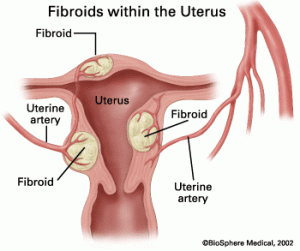
  • Uterine Fibroids:  Non-cancerous (benign) tumors of solid muscle tissue that develop in the uterus
  • Uterine Cysts:  A fluid filled sac found in the pelvis that usually originate in the ovaries
  • Uterine Prolapse:  When the uterus falls or descents from its normal position into the vaginal area
  • Endometriosis: A condition where the cells from the lining of the uterus grow in other areas of the body
  • Cervical Cancer: A disease that forms when cancerous tumors develop and grow in the cervix
  • Uterine Cancer:  A disease that forms when cancerous tumors develop and grow in the uterus
  • Menorrhagia:  Very heavy, abnormal menstrual bleeding
  • Dysmenorrhea:  Very painful periods, excessive menstrual cramping and pelvic pain

When a woman has been diagnosed with one of these gynecological conditions, if the symptoms are severe enough, surgery by way of a hysterectomy may be the best recommendation and often yields effective outcomes. A hysterectomy is a surgery in which the uterus is removed. This can be done partially or in full. Today, many gynecologists are turning to a minimally invasive approach to performing a hysterectomy by using the da Vinci robotic surgical system.  While the robotic surgery technique is still considered relatively new, it is becoming a popular alternative for women throughout the Dallas, TX area as they contemplate the right hysterectomy approach to take.

Robotic surgery has been effective in the treating conditions that cause uterine fibroids, uterine cysts, endometriosis, and other gynecological symptoms.  According to Dr. Murray Fox, a Dallas, TX gynecologist and an early robotic surgery pioneer, “Increasing numbers of women are choosing this approach when faced with a myomectomy (removal of/treatment for uterine fibroids) or hysterectomy (the full or partial removal of the uterus), for example. Robotic surgery continues to result in excellent clinical outcomes, while offering patients an overall easier recovery period.”

The technology of the da Vinci robotic surgical system uses very tiny incisions allowing surgeons to use miniature instruments and a 3D camera and microscope to view the inside of the uterus and operate with precise movements.  While the arm of the robot does the actual movement, the surgeon is responsible for controlling and directing these moves with absolute accuracy and precision. The approach leaves minimal scarring and reduces the loss of blood, pain, and overall trauma that historically accompanies an open hysterectomy.

Not all gynecological practices in the Dallas, Texas area have adopted the robotic surgery approach. Despite the revolutionary advancement, it is a big investment with a large learning curve. The gynecologists with the Women’s Specialists of Plano state, “It will only be a matter of time until the robotic way is the only way.  We have seen the difference it has made in the hundreds of patients that have walked through the doors of our North Dallas practice. It is revolutionary to say the least.”

To learn more about the da Vinci Robotic Surgery, please visit the Women’s Specialists of Plano, a board-certified group of Dallas, TX gynecologists, at: http://www.obgynplano.com/dallas-frisco-allen/minimally-invasive/robotic-surgery/.

Share and Enjoy:
  • Digg
  • Sphinn
  • del.icio.us
  • Facebook
  • Mixx
  • Google Bookmarks
  • TwitThis

Why Women’s Health Needs Require Specialized Care Through A Skilled OBGYN

For generations, the differences between men and women were always defined from a social aspect.  Historically speaking, men were considered superior over women, and it was this ideology that managed to rule the co-existences of the two sexes for hundreds of years. As the goal of equality has continued to become a reality in modern societies, many of the differences between men and women have evened out to an equal playing field.  When it comes to the physical gap, however, there will never really be equality.

Men and women will always differ in shape, weight, height, and anatomy.  Both will experience their own range of physical, emotional and health problems as they relate to the specific sex.  They have different problems, with different needs.

It’s why at some point in time, men will look towards finding a qualified urologist or male specific physician they can trust, and why women look towards finding a resourceful women’s health center or gynecologist (doctor for a female who specializes in the health needs of women) so that the problems and needs specific to the male or female body can be addressed.

While heart disease, cancer, weight management, the risk for diabetes, and many other ailments are common concerns for both men and women, there are specific conditions related to the female anatomy that a man will never experience.  It’s the reason why annual visits to a gynecologist are so crucial to the long-term health of a woman.

According to the Women’s Specialists of Plano, a women’s health center in Plano, TX, there are a handful of common problems that women will experience that a man never will. These conditions and reasons to visit a doctor for a female, specifically, are why millions of young women begin seeing a gynecologist at a relatively early age.

  • PMS

When a woman is on her menstrual cycle, PMS can kick in and for some, it is bad enough that all normal activities will come to a halt.  The symptoms of PMS can range from mild to severe and will include (for most women) cramping, bloating, mood swings, headaches and fatigue.  Experts believe that hormones play the biggest factor in the severity of symptoms associated with PMS.  Once a woman is under the routine care of a gynecologist, these symptoms can often be treated and managed each month.

  • Endometriosis

Endometriosis is somewhat common among women. It is a female health disorder that occurs when the cells that typically reside in the lining of the uterus, grow in other parts of the body. The most common symptoms are very heavy bleeding and cramping, irregular periods, long-lasting menstrual cycles, and problems getting pregnant (infertility).  Many gynecologists offer specialized treatment for endometriosis such as endometrial ablation, hysterectomy, and other minimally invasive techniques.

  • Ovarian Cysts

Ovarian cysts are very common among the female population. These are small, fluid-like sacs that develop and grow in the uterus. Many women may have these benign growths and not experience any symptoms, while other women may have problems associated with ovarian cysts such as bleeding, cramping, and rupture.  Gynecologists treat ovarian cysts as a routine procedure and today, many progressive treatments are an option including laparoscopic surgery, and robotic surgery for hysterectomy.

  • HPV Virus

Genital human papillomavirus is notably the most common sexually transmitted infection among young women. There are varying types of HPV that can lead to a myriad of symptoms including pelvic pain, genital warts, and other conditions that can lead to larger problems such as cervical cancer. HPV can be prevented and it is a topic of discussion among gynecologists and their female patients.  These conversations generally involve the discussion of prevention and treatment.

  • Vaginal Infections

Bacteria and fungi are the culprits that lead to vaginal infections among women. It is one of the most common reasons why a woman will visit her gynecologist outside of her annual visit. Discharge, itching, vaginal burning and irritation are the symptoms associated with a vaginal infection.   Antibiotics can usually cure most vaginal infections effectively.  A gynecologist will be able to discuss prevention techniques to help keep future infections at bay.

  • Pregnancy Prevention

Something that will surely differentiate a man and a woman until the end of time is pregnancy.  Millions of women in the United States visit their gynecologist each and every year to discuss pregnancy prevention, birth control, and pre-natal care for if and when a pregnancy occurs. It is a topic of discussion at most OBGYN visits until a woman has had all of her children and begins the next phase of life (menopause). A gynecologist is the best resource to discuss pregnancy and pregnancy prevention with a woman.

  • Hysterectomy

Thousands of women will undergo a hysterectomy in a given year. A gynecologist may recommend a hysterectomy for many reasons, including for the treatment of fibroid tumors, PID, ovarian cysts, and endometriosis. Today’s technology has allowed skilled gynecologists to do hysterectomies robotically which leads to quicker recovery and a decrease in unwanted side effects. Robotic hysterectomies are not yet offered by all gynecologists as it takes extensive training and time to be able to master the technology; it is becoming more popular and a preferred choice among women.

Every city and state has a women’s health center that can offer a doctor for a female’s medical needs. Sometimes referred to as a women’s health physician, gynecologist, or OBGYN, they all meet the same challenge—keeping a female healthy both physically and in some case, emotionally.  It’s important to see your doctor annually and sometimes more often if problems or an untreated condition persists.

The gynecologists from the Women’s Specialist of Plano (OBGYN in North Dallas) contributed to this feature.

Share and Enjoy:
  • Digg
  • Sphinn
  • del.icio.us
  • Facebook
  • Mixx
  • Google Bookmarks
  • TwitThis

Finally: An Answer For Heavy Menstrual Bleeding

The Women’s Specialists of Plano, a group of gynecologists in Plano, Texas, were used as resources for this article.

Many women suffer from abnormal menstrual periods.  For many, a very heavy menstruation is the primary symptom. An average of 90% of women will complain of lengthy or heavy periods at least once in their adolescent years. But when heavy and lengthy periods become a monthly occurrence for a longer period of time than what is deemed normal, a medical procedure might be necessary to cure the problem.  For women who experience on-going, very heavy menstrual periods and who are finished having children, one option to consider is endometrial ablation.

Endometrial ablation is one treatment for heavy periods and is the removal of the uterine lining called the endometrium. Endometrial ablation will not be performed for the removal of cancerous tissue and is not a successful cancer treatment. Endometrial ablation is performed to cure abnormally heavy menstruation, and should only be performed when other non-surgical procedures have failed, and the patient does not desire to become pregnant in the future.

Before the endometrial ablation procedure is performed a biopsy of the endometrium will be performed to ensure that the uterus is free of cancer. Once the biopsy is found to be cancer-free an examination will be performed to ensure that polyps or an infection are not the causes of the heavy bleeding. If all tests come back clear then your doctor may choose to move forward with the endometrial ablation procedure. The best candidates for an endometrial ablation for the treatment of heavy periods usually meet the following criteria:

  • A woman who suffers from heavy menstrual bleeding monthly
  • A woman who wishes to cease menstruation but wants to avoid hysterectomy
  • A woman who is finished bearing children
  • A woman whom is clear of genital infection
  • A woman who does not have polyps or any other malformation of the uterus
  • A woman who has not been diagnosed with cancer
  • A woman who has attempted non-surgical therapies to no avail

To begin the ablation, a woman’s cervix is dilated so that instruments can be inserted through the cavity. The instrument used depends upon the type of ablation you and your doctor have chosen. The different types of ablation can be performed by laser beam, electricity, freezing, heating, or microwave energy. The type of procedure depends upon a number of things including but not limited to:

  • The preference and experience of the surgeon
  • The presence of fibroids
  • The size and shape of the uterus
  • Whether or not pretreatment medication was given
  • The type of anesthesia chosen by the patient and surgeon

The type of procedure most commonly chosen by experienced gynecologists is the FDA approved NovaSure.  NovaSure is a minimally invasive and extremely effective endometrial ablation procedure with up to 90% of patients claiming significantly lighter periods after the procedure. NovaSure can usually be performed in office in a few minutes and has been known to cause the patient very little pain. During the NovaSure procedure a woman will come in to the office during her cycle. She will receive a general anesthesia in the cervix prior to the procedure. The cervix will then be dilated and a small wand will be inserted into the cervix. A mesh device will expand from the wand into the uterus fitting the uterine cavity precisely. Then a carefully measured radio frequency is delivered through the mesh for 90 seconds deteriorating the endometrium. The device and the mesh are then removed from the uterus.

The procedure typically lasts about 5-10 minutes and most women are able to return to their daily activities after 24 hours. Some cramping and discharge is associated with the procedure but is normal and should not cause alarm.  It is necessary to sustain from sexual intercourse and to avoid tampon usage for several weeks after the procedure or until your doctor has cleared you to do so.

NovaSure is not performed on women who hope to conceive in the future, not because it is not possible, but because it is unsafe for both the mother and the child. Once you return to normal sexual activity after NovaSure it is important that you use some type of contraceptive, you and your doctor should discuss this and decide which contraceptive would be right for you.

Some side effects may follow after the procedure is performed. These symptoms do not occur in every case and should not cause alarm. The truth is that 90% of women who receive this surgery are very pleased with the outcome, and claim to have suffered from very minimal side effects.

If you are suffering from heavy menstrual bleeding, talk to your doctor today and rid yourself of this heavy burden.  Treatment for heavy periods by way of endometrial ablation has changed the lives of many women. Talk to your doctor today and get more information on the endometrial ablation procedure that might be best for your situation and learn if NovaSure for heavy periods is your answer.

Share and Enjoy:
  • Digg
  • Sphinn
  • del.icio.us
  • Facebook
  • Mixx
  • Google Bookmarks
  • TwitThis

I have a Prolapsed Bladder. What Treatment Options Are Available for Cystoceles?

According to the Women’s Specialists of Plano, a group of gynecologists in the Plano, Texas area, if you are a woman that has delivered multiple children, has experienced a difficult childbirth delivery, or if you have gone through menopause, you may experience the unwanted and frustrating symptoms associated with a cystocele. Pelvic floor dysfunction is a common disorder among both males and females, but even more commonly found in females because of the pelvic and vaginal pressure associated with the above scenarios.

A cystocele (also referred to as a prolapsed bladder) is a pelvic organ prolapse that is explained as the result of a drooping bladder. This condition most commonly affects women between the ages of 50-60. There are many reasons why a woman may experience a prolapsed bladder. A woman’s bladder can droop and cause a cystocele after pushing to deliver children, years of straining to have bowel movements, or heavy lifting over an extended period of time. Another common cause of a cystocele is a previous hysterectomy. Many gynecologists state that when women go through menopause, estrogen begins to naturally decrease within the female body. Estrogen regulates the strength of the muscles around the vagina. When Estrogen is no longer produced these muscles loosen and can lead to a prolapsed bladder.

Many women will have a cystocele and not show symptoms, while others will deal with a variety of unwanted symptoms.  Symptoms of a cystocele include:

  • Pressure in the vaginal area
  • A feeling of fullness in the pelvic region
  • Discomfort in the pelvic area when you cough, bend, jump, lift, etc.
  • Urinary incontinence ranging from mile to severe
  • Bladder infections
  • Pain or urinary leakage during sexual intercourse

All of these symptoms will vary depending on the stage and type of cystocele that is presented at diagnosis. There are three types of cystoceles that are classified by their severity.

They are classified as follows:

Grade 1 Cystocele

A grade 1 cystocele will show milder symptoms initially but may worsen if not treated.  During this phase the bladder droops just slightly into the vagina causing discomfort and urine leakage. The treatment for this type of cystocele may be rest and recovery, and avoiding heavy lifting or straining which may cause the problem to worsen.  Daily exercises of the vaginal muscles through Kegel movements is also recommended.

Grade 2 Cystocele

A grade 2 cystocele is a bit more severe.  During this phase the bladder droops until it can be seen through the opening of the vagina causing the complete obstruction of the vagina. This type of cystocele causes major discomfort and severe urinary incontinence. The treatment for this type of cystocele is usually some form of cystocele repair surgery but the cystocele may also be treated with a pessary device.

Grade 3 Cystocele

A grade 3 cystocele is the most severe of cystoceles. This is the diagnosis when the bladder droops low enough to bulge completely out of the vagina. Symptoms are similar to those of a grade 2 cystocele—but worse. Treatment for this type of bladder prolapse is cystocele repair surgery to move the bladder back into its proper place.

Treatment of grade 2 and grade 3 cystoceles are A.) The placement of a pessary device or B.) A cystocele repair surgery to place the bladder back into its place and keep it there.

A Pessary Device is a device that it placed against the uterus inside the vagina to hold the bladder in place. They are made of many types of materials in several different sizes. You and your OBGYN will discuss which is right for you, how to remove and replace it, and the proper procedures for cleaning it. A pessary must be removed on a regular basis to avoid infection or any other complications. Many women are fitted for a pessary device and yield very positive results.

Some women will require cystocele repair surgery for the treatment of their cystocele.  In this repair surgery sutures are used to reattach the fascia thus giving enough support to allow the bladder to remain in place. Patients receiving this surgery should be prepared to stay in the hospital for several days and take 4-6 weeks to fully recover. This surgery is very successful in replacing the bladder thus eliminating the cystocele. The surgery can be performed through open and laparoscopic techniques depending on the grade and severity of the defect. The percentage of recurring cystoceles is very small after a cystocele repair surgery.

If you are suffering from discomfort and urinary leakage or incontinence do not assume it could be the result of age, you need to see your doctor. In the early stages, cystocele treatments are minimally invasive and maximally effective.  Contact the Plano, Texas group of OBGYNs from the Women’s Specialists of Plano and learn more about cystocele out treatment options and cystocele repair surgery today.

Share and Enjoy:
  • Digg
  • Sphinn
  • del.icio.us
  • Facebook
  • Mixx
  • Google Bookmarks
  • TwitThis

First OB Appt | When to go to the Gynecologist | Pap Smear Test | Plano, Texas

When to go to the gynecologist for the first time is a question that women have been asking for years. Once upon a time the answer to this question was around 21. But because women are becoming sexually active at progressively younger ages this question does not have a definitive answer. According to the gynecologists that make up the Plano, Texas based Women’s Specialists of Plano, “The most important concept to remember is that once you become sexually active, at whatever age, it is important to begin receiving regular pap smears. A pap smear test is the only way to be sure that you are free of STDs, ovarian, cervical or uterine cancer, or any other issues or underlying conditions that may occur with the reproductive organs.”

Your first OB appt and first Pap smear test is a common fear for every young woman. Oftentimes, the fear and anxiety can be so great that young women will purposely put off making that very first appointment.  Most women are anxious about exposing their most intimate parts to a stranger and are also afraid that there may be an amount of pain associated with the checkup. Both of these fears are normal thoughts.

Drs. Murray Fox, Daryl Greebon, Jules Monier, Dennis Eisenberg and Jennifer Newton (Plano, Texas gynecologists) answered several questions for this Q and A designed to help you decide when the best time is to visit an OBGYN for the first time.

Q. First OB appt:  When should I go to the gynecologist for the first time?

A. You should see your gynecologist for the first time upon becoming sexually active. Other reasons to visits the gynecologist would be:

  • Abnormal bleeding outside of your normal menstrual cycle
  • Menstrual periods become longer
  • Menstrual periods become heavier and more painful
  • An overall change or disruption in your menstrual period
  • Severe pelvic cramps outside of your normal menstrual cycle
  • Infections such as a bacterial infection or yeast infection that would cause itching, redness, burning or unusual discharge

Q. At what age should I have my first pap smear test?

A. The recommended age for a woman to receive her first pap smear is at age 21. Keep in mind that this age applies to a woman who is not sexually active, and has had regular, similar periods since the beginning of her menstruation.

Q. Why is it important to get annual pap smears?

A. It is important to return to your gynecologist annually because there are complications that arise without symptoms. This means that something could be wrong with your reproductive organs though you have no symptoms and no reason to believe so. The early stages of ovarian and cervical cancer will cause your pap smear to test abnormally; through a routine pelvic exam which is usually also included in these annual appointments, such abnormalities as tumors and cysts can also be diagnosed. Annual pap smears and pelvic exams allow your doctor to catch specific conditions at early stages so that proper treatment can be implemented and fertility can remain healthy. In addition, your gynecologist will check your breasts for any abnormal lumps during each annual visit. This is important because most women do not begin receiving regular mammograms until they are in their forties. Your gynecologist may be able to help you detect breast cancer in its early stages at your annual.

Q. Does it hurt to have a pap smear?

A. No, pap smears do not hurt.  There will be a mild discomfort during the exam and for most women the first check-up will be uncomfortable. However, the majority of the discomfort is the result of the unknown. There should be no pain associated with your pap smear and all future visits will become easier each and every time.

Q. What does the gynecologist do during a pap smear?

A. Before the check-up a nurse will bring you a sheet and ask you to undress waist down. As your doctor comes into the room you will be asked to lie down and place your feet in stirrups which will keep your feet in place during the exam. Your doctor will then use a lubricated speculum to gently open your vagina. It is important to relax and take deep breaths during this part. The more relaxed you are the less uncomfortable you are likely to be. Your doctor will then use a long q-tip to swab the inside of your vagina. This swab is what is tested to determine if the cells are healthy, or abnormal. After your doctor swabs you using the speculum, the tool is removed and the exam will be finished.

Most women find that their anxiety about their first pap smear test disappears just as quickly as the actually procedure. But for some the anxiety returns every year when they go back for their annual. It is important to remember that your health should be rated much higher than your fear.

It is important to receive your checkup annually. But it is important to call your gynecologist sooner if:

  • Your periods become irregular or cease
  • Your periods become heavy
  • You experience odor and/or discomfort
  • If intercourse becomes painful
  • If you think you may be pregnant

When the examination portion of your appointment is complete, your gynecologist will most likely meet with you and discuss a health follow-up with you and answer any questions you may have about such topics as birth control, etc. Finding the right OBGYN is just as important as going every year. Some women see the same doctor through their twenties, the birth of their children and into their mid-life years.  If the time is now for you to find and visit an OBGYN, ask around to friends and family for a solid recommendation and make the appointment sooner than later.

Share and Enjoy:
  • Digg
  • Sphinn
  • del.icio.us
  • Facebook
  • Mixx
  • Google Bookmarks
  • TwitThis

Treatment for Dysmenorrhea | Severe Menstrual Cramps | Menstrual Cramps Relief | Plano, Texas

Severe Menstrual Cramps? A group of local Plano, Texas OBGYN doctors offer  information about the causes of painful periods and promising treatment for dysmenorrhea.

For some of us, those dreadful menstrual cramps are a sign that our period is lurking just around the bend, and then occur in sync with the first few days of our cycle. Like our mothers and grandmothers before us, this is just one of the beautiful and ugly parts of being a woman. But what does it mean when your pain becomes life changing, and alarming, causing the mere idea of getting up and out to send you into a panic? You see your OBGYN.

Painful periods, or dysmenorrhea as it is medically referred to, affects about 50% of women of post-pubescent age, and is most common in women during their early to mid-twenties. The occurrence of these severe menstrual cramps tapers off as a woman ages and most commonly disappears once a woman has reached her thirties. Dysmenorrhea is the scientific name for painful periods, in which a woman describes her cramps to be debilitating. Dysmenorrhea is further divided into two categories one being Primary Dysmenorrhea, and the other being Secondary Dysmenorrhea. Upon visiting with your OBGYN you will be diagnosed among one or the other. Of the 50% of women suffering from painful periods, 85% will be diagnosed with Primary Dysmenorrhea.

Primary Dysmenorrhea is usually the diagnosis if your OBGYN is unable to find any internal obstruction or problem that may be causing painful periods and severe menstrual cramps. Primary dysmenorrhea usually becomes a problem between 12 months and 2 years following a woman’s first cycle. The painful menstrual cramps usually begin a few hours prior to or just after the onset of menstruation. Pain is most severe during the first 2 days of the cycle. Characteristically the pain is described as spasmodic in nature and strongest over the lower abdomen and lower back. In severe cases the menstrual pain is also felt in the thighs. The pain is most commonly referred to as “labor-like” and accompanied by nausea, diarrhea, fatigue, and headache.  Symptoms that occasionally accompany these painful periods are anxiety and dizziness. Seldom do any symptoms persist beyond the third day of the cycle. Though Primary Dysmenorrhea does not appear to be prevented by any amount of or lack of activity, a few activities seem to help with menstrual cramps relief:

  • Avoid stressful situations
  • Take a warm bath, or use a warm compress
  • Go for long slow paced walks
  • Avoid fatty foods
  • Participating in Yoga
  • Pain-relieving medications
  • Oral contraceptives

Secondary Dysmenorrhea will be the diagnoses if your OBGYN finds that the pain is caused by some sort of gynecological problem. Secondary Dysmenorrhea does not begin shortly after a woman’s first cycle, but usually 3+ years following. The painful menstruation is likely to begin at the onset of the cycle and last throughout the entirety of menstruation. The occurrence of secondary painful periods requires medical attention and at times medical procedures in order to help with severe menstrual cramps relief. Unlike Primary Dysmenorrhea, medical treatments are often the only hope for relief from pain. The cause of Secondary Dysmenorrhea will determine the proper treatment of it. A few of the procedures on the market for the treatment for dysmenorrhea include:

  • Intrauterine Contraceptive (Mirena)
  • Oral Contraceptives (such as birth control pills)
  • Vitamin B supplements (For pain related to lack of nutrition)
  • Antibiotics (for Pelvic Inflammatory Disease—also referred to as PID—or an untreated STD)
  • Surgery (For a Cyst, or Fibroid Tumor)
  • Dilation & Curettage (Removal of small amount of uterine lining, often as a cancer precaution)
  • Hysterectomy (if the pain is caused by a malfunctioning reproductive organ)
  • Endometrial Ablation (Permanent removal of uterine lining to prevent further pain and/or limit bleeding)

Treatment for dysmenorrhea varies according to severity of the issue and the problem causing the pain. The bottom line is if you are suffering from abnormally painful periods, it is of utmost importance that you check in with you OBGYN and discuss what is causing it, and your options for pain relief.

Share and Enjoy:
  • Digg
  • Sphinn
  • del.icio.us
  • Facebook
  • Mixx
  • Google Bookmarks
  • TwitThis

Treatment for Menorrhagia | Abnormal Menstrual Bleeding | Endometrial Ablation | Novasure Procedure | Plano, Texas

The gynecologists that make up the Women’s Specialists of Plano in Plano, Texas (http://obgynplano.com) were interviewed for this article.

If you are a typical female between the age of 12 and 50, having your period each month probably passes like a leaf in the wind. For many women, having a period may cause a few symptoms that can easily be managed by taking a simple ibuprofen and using some feminine protection—and then just like that, it’s gone. For others, this monthly visit from mother nature is a dreaded and life altering time that sends some women into hiding.

Meet Amy.

Amy is a normal, active mother of three in her mid-thirties with a hectic life. Her schedule was very busy between work, working out, ballet for her girls, soccer for her little boy, PTA, and maintaining a happy marriage. Amy didn’t have time to be slowed down by her period, yet for a few days every month she felt incapable of maintaining her schedule because her periods were so heavy, and so painful. So heavy in fact, that she found herself in the bathroom every hour to deal with the side effects of her period. She knew that her cycles hadn’t always been this heavy, or this painful, but thought the abnormal menstrual bleeding was just the result of the birth of her three children, and her active lifestyle.

After Amy’s last period she felt fatigued, and light-headed. Soon after, she met up with her girlfriends for lunch. Exhausted by her life altering periods and abnormal menstrual bleeding she decided to bring it up with her friends. “At lunch, I explained to my friends just how heavy and painful my periods had been all these years, and I was surprised that none of them had similar experiences,” said Amy. “In fact, they all were very concerned and advise me to see my doctor. So the next week I visited my OBGYN and was ecstatic to learn that my condition actually had a name.”

Amy’s doctor diagnosed her with Menorrhagia.

Menorrhagia is defined as an excessively heavy period, but can also cause extreme discomfort. Periods are different for every woman. Some are short and painless, and some are long and painful. But it is not at all normal for a woman’s period to affect her everyday life or keep her from performing her normal activities. Reasons to see an OBGYN with the suspicion of Menorrhagia are things such as:

  • Periods that last longer than 5 days
  • Painful periods with severe pelvic pain
  • Periods that require double sanitary protection (tampon and pad)
  • Bleeding through a tampon or pad in an hour or less for several hours in a row
  • The passing of large blood clots
  • Fatigue, pain, headaches, nausea

Though depression and social anxiety are not symptoms that point towards menorrhagia, they often are results of the problem. Women such as Amy, who normally have a very active and busy life, begin to invert, afraid of excessive and abnormal menstrual bleeding while in public or the inability to get to the restroom before leaking.

Thankfully, Amy found out that there are multiple options to cure this condition. After considering the number of years she had been suffering from heavy blood loss, and that she had three beautiful children and did not wish for anymore, Amy’s OBGYN explained to her that she was a great candidate for an endometrial ablation. With this procedure, the entire lining of the uterus is removed with the intent of preventing any future menstruation. The NovaSure procedure is one such approved endometrial ablation treatments for menorrhagia.

According to the gynecologists at the Women’s Specialist of Plano, “The NovaSure procedure uses radio frequency energy to permanently remove the lining and is always effective in slowing the bleeding, and at times prevents it completely. 95% of women who receive the ablation are very happy with the outcome. The only down side to the procedure is that it can prevent future pregnancies.  We recommend the NovaSure endometrial ablation procedure when we can because it is a more conservative treatment option than procedures such as a hysterectomy.

Amy moved forward with the surgery. It was minimally invasive, almost painless, and had an extremely fast recovery. Amy was back to her busy schedule and fast pace life, but this time, without fear of leakage, and days spent at home due to pain and fear.

If you are a woman who is experiencing heavy periods that are interrupting your life, there is help. It is very important to track your period and be aware of changes in consistency, duration, and pain level. Don’t wait as long as Amy did, if changes arise consult your OBGYN today.

Share and Enjoy:
  • Digg
  • Sphinn
  • del.icio.us
  • Facebook
  • Mixx
  • Google Bookmarks
  • TwitThis

Pelvic Inflammatory Disease | Symptoms of PID | What is PID? | Plano, Texas

The Women’s Specialists of Plano, Texas (http://obgynplano.com) put together this informational sheet on Pelvic Inflammatory Disease.  They treat women—most commonly under the age of 35—who suffer from this gynecological disease. Pelvic Inflammatory Disease, or P.I.D. as it is commonly referred to, is an uncomfortable and at times deadly disease that affects a small percentage of women during their childbearing years. The symptoms of P.I.D. can be painful and very uncomfortable. It’s important for women to understand what P.I.D. is, how it is transmitted, treated and what they can do to prevent themselves from getting it.

Q. What is P.I.D?

Pelvic Inflammatory Disease is an infection of the uterus, fallopian tubes, ovaries and other reproductive organs that is caused by the transmission of foreign bacteria. It is a potentially serious complication that can lead to damage of the reproductive organs, miscarriage, and infertility.

Q. How Common is P.I.D.

It is estimated that approximately 750,000 women within the United States are affected by P.I.D. each year. It is most common among women with multiple sex partners, and least common among women in monogamous relationships. Women in their childbearing years (under the age 25) that are sexually active are at a higher risk of contracting P.I.D. than women over 25 years of age. A woman who has previously been diagnosed with P.I.D. is at a heightened risk of contracting the disease again.

Q. How Does a Woman Contract P.I.D?

Pelvic Inflammatory Disease is initiated when a foreign bacteria moves through the opening in a woman’s cervix and up into the reproductive organs. The disease can be contracted many different ways, but is most commonly caused by: The STD’s Gonorrhea and Chlamydia, Douching, and Intrauterine Devices.

Q. What are the Symptoms of P.I.D?

P.I.D commonly goes unnoticed in its early stages, even though it may be causing great damage to a woman’s reproductive organs. Common symptoms of P.I.D. as the disease progresses include:

  • Lower Abdominal Pain
  • Fever
  • Foul Smelling Discharge
  • Pain during Intercourse
  • Irregular Menstruation

If the disease is not found and treated promptly, P.I.D. can cause infertility, ectopic pregnancy, severe pain, and death.

Q. How is P.I.D. Treated?

Antibiotics are used to treat P.I.D. although they cannot reverse any damage that may have already taken place inside the female reproductive organs. In most cases the antibiotics will cure all symptoms associated with disease as long as the medication is taken as prescribed. If a woman is sexual active prior to being treated for P.I.D the woman’s partner(s) should also be treated as they may also be infected with the bacteria, though they may not have symptoms.

A woman may have to receive inpatient treatment via the hospital is she is experiencing high fever, is pregnant, or is experiencing a tubal pregnancy as a result of P.I.D.

Q. How Can Women Protect Themselves From P.I.D?

The best answer to this question is to abstain from sexual intercourse, unless you are sure your partner is uninfected by any STD. It has been found that woman in a monogamous relationship are at a much lower risk of contracting the disease than those who have multiple partners. If abstinence is not an option for you, then it is important to make use of protection such as condoms. Condoms have been shown to help prevent the transmission of STDs though they are not 100% effective.

If a woman noticing any unusual symptoms (such as: irregular period, a genital sore, or foul smelling discharge) she should consult her OBGYN immediately. P.I.D. can be prevented if an STD can be treated before it causes serious complications.

And last but not least, any sexually active woman should be screened for STDs regularly and thoroughly.

Share and Enjoy:
  • Digg
  • Sphinn
  • del.icio.us
  • Facebook
  • Mixx
  • Google Bookmarks
  • TwitThis

Pelvic Floor Dysfunction | Vaginal Prolapse | Vaginal Pessary | Plano, Texas

The Women’s Specialists of Plano (972.379.2416, http://obgynplano.com) specializes in pelvic floor dysfunction and vaginal prolapse. When Jean, a 74-year old resident of Plano, Texas, began having unusual and at times frightening symptoms during bowel movements, she decided to make an appointment with the Women’s Specialists of Plano.  “What should have been an everyday normal bodily function for anyone, created stress and anxiety for me because every time I attempted to take a bowel movement, I felt as if my internal organs were coming out—and in most cases, they were,” said Jean.

Jean’s OBGYN, Dr. Murray Fox, diagnosed her condition as pelvic floor dysfunction, or in her case, a vaginal prolapse. It is a common disorder seen by the entire group of doctors at WSOP including Drs. Jules Monier, Dennis Eisenberg, Daryl Greebon and Jennifer Newton.

Pelvic floor dysfunction is a condition in which the muscles that uphold the reproductive and digestive organs of a female weaken, and fail to work properly. The immediate result of this muscle failure is “falling of the female organs”, or, a sensation of pelvic pressure or an actual falling of the organs dropping through the vagina. Difficulty passing stools and urinary incontinence are the most common immediate symptoms eventually causing pain, and even more alarming symptoms such as what Jean was experiencing.  With the insertion of a vaginal pessary, Jean’s symptoms went away and she was able to resume life as normal.

During the early stages of pelvic floor dysfunction, it may be possible to re-strengthen the pelvic muscles through physical therapy and repair the damage before the dysfunction progresses. But due to the nature of the symptoms, it is commonly missed at an early stage, and the dysfunction becomes much worse.

When pelvic floor dysfunction is not treated properly or immediately it can cause problems of much larger proportions such as:

  • Cystocele-The protrusion of the bladder into, and at times through the vagina.
  • Rectocele-The protrusion of the rectum into, and at times through the vagina.
  • Enterocele-The protrusion of the bowel into, and at times through the vagina.
  • Urethrocele-The protrusion of the urethra into, and at times through the vagina.
  • Vaginal Prolapse-The protrusion of the top of the vagina into the lower portion of the vagina completely inverting it. (This is most common in post-hysterectomy patients.)

Statistics suggest that 40% of women between 60-80 years of age will experience some degree of pelvic floor dysfunction or vaginal prolapse. At this age the dysfunction is the resort of multiple things including age, gravity, number of children, constipation, childbirth etc. However, it is important to note that 1 of every 3 women of 25 and up will suffer from the dysfunction as well. The most common causes being pregnancy, obesity, vaginal delivery, and menopause.

If you begin to notice symptoms that lead you to believe that you may be suffering from any degree of pelvic floor dysfunction, consult with your physician as soon as possible. Pelvic floor dysfunction is diagnosed through a series of testing. Your doctor will begin their testing with a careful study of your medical history, symptoms, and physically or emotionally traumatic experiences that could be contributing to the physical and emotional pain of this disorder. Specific tests will be administered to determine which muscles are not properly performing their job.

Pelvic floor dysfunction may be treated with specialized physical therapy known as biofeedback if the dysfunction is found at an early stage. With biofeedback, a person may be able to strengthen the pelvic floor muscles and remind the body to perform these tasks as it should. Approximately 75% of individuals with pelvic floor dysfunction experience significant improvement with biofeedback.

Many times, pelvic floor dysfunction patients and those suffering from vaginal prolapse will need corrective surgery.  Using a vaginal pessary or a mesh device is often effective for curing the problem. A vaginal pessary can be inserted into the vagina to support the prolapsed organs. Meshes to secure organs into place are also commonly used. Using sutures, a mesh is used to help keep the bladder, uterus or other pelvic organs secure.  Using a pessary or a mesh will commonly alleviate symptoms.

If you are experiencing unusual symptoms that you believe may be associated with pelvic floor dysfunction, consult with your doctor and learn about the treatment options that are available to help you with your specific situation.

Share and Enjoy:
  • Digg
  • Sphinn
  • del.icio.us
  • Facebook
  • Mixx
  • Google Bookmarks
  • TwitThis

Symptoms of Peri-Menopause | Pre-Menopausal Symptoms | Menopausal Bleeding | Plano, TX

The stage of life between a young woman’s fertility, and the menopause of a woman’s later years is called peri-menopause. Peri-menopause begins in a woman’s late 30s to early 40s and can last 3-15 years.  According to Drs. Fox, Greebon, Monier, Eisenberg and Newton, Plano, TX gynecologists that make up the Women’s Specialists of Plano (972.379.2416), “This number is different for every woman, but one fact that remains the same is that during this phase, undesirable effects will take place to a woman’s body.”

Peri-Menopausal Bleeding

Peri-menopause is onset by the fluctuations of the female hormones estrogen and progesterone. These normal hormone changes are the result of the ongoing decrease of eggs inside a woman’s ovaries.  As these eggs decrease, there is no more cyclic estrogen and progesterone production. The symptoms a woman will experience during due to these biological changes most often reflect peri-menopause. The most obvious sign that a woman may be in peri-menopause is the change in her menstrual cycle. It is important to highlight what a normal period looks like for most women:

  • The start of one period to the start of the next should be at least 21 days
  • Periods should last less than 10 days
  • There is no spotting in between periods
  • Periods should be no further apart than 90 days

Because all women’s cycles are unique, peri-menopausal bleeding changes will be unique to each woman. Some women notice a very heavy period one-month, followed by the absence of a period the next month. Others may experience more frequent periods that appear less than the average 28-32 days apart. Some woman may only spot during their period for several months, while others notice heavier bleeding throughout. Only you will know if your cycle has changed. The sporadic distribution of estrogen and progesterone is to blame for menopausal bleeding changes and is inevitable.

The natural hormonal imbalance that takes place inside of a woman’s body may cause other undesirable symptoms. Some of the symptoms of peri-menopause include:

  • Hot flashes
  • Sleep problems (which affects 75% of all peri-menopausal women)
  • Mood changes
  • Vaginal dryness
  • Bladder problems
  • Decreased fertility
  • Increase in bad cholesterol
  • Loss of bone mass
  • Weight gain

Other common symptoms of peri-menopause include bouts of depression; it is also very common for a woman in these years to suffer from a loss in libido and decreased sexual arousal.

The Transition from Peri-Menopause to Menopause

Every woman is born with a certain amount of eggs. She will not produce anymore throughout her life. As a woman ages, so do the ovaries which is where the eggs reside. During pre-menopause the fluctuation of hormones within a woman’s body begin to make it difficult for the eggs to reach the point of ovulation, causing the above mentioned symptoms for a peri-menopausal woman. As it becomes increasingly difficult for an egg to reach ovulation, ovulation begins to cease. After an egg is no longer able to reach ovulation at all, ovulation ceases completely and so does a woman’s cycle. It is at this time that a woman’s transition from peri-menopause to menopause is complete.

It is important to remember that peri-menopause is the stage before menopause and does not mean that you have crossed over the bridge. A woman in peri-menopause has a decreased likelihood of getting pregnant, but it is still possible. A woman is not considered menopausal until she has been without a cycle for a full 12 months. If you are peri-menopausal and aspire to have a child, talk to your doctor about your options.

Peri-menopause shows itself differently in every woman. Some may find it alarmingly obvious that their body is changing, while others may soar through peri-menopause into menopause without ever noticing a single hot flash. However it is important to note that if you are noticing that the symptoms of peri-menopause are beginning to affect parts of your daily life you need to speak with your doctor. He or she will discuss your options with you and help you to find comfort during this transition.

There are several approaches to easing the transition from peri-menopause to menopause; only your doctor will be able to decide what option is best for you. Some methods that women have found helpful to help minimize the symptoms of peri-menopause include:

  • Low dose birth control, for the relief of hot flashes and the changes associated with menopausal bleeding.
  • Exercise, which is good for your health and known to help a woman receive better rest.
  • Vaginal lubricants and sex therapy, to help recover the loss of libido.
  • A diet full of calcium, to help protect against the loss of bone mass.
  • Anti-depressants, to help control the mood swings and bouts of depression.

The Women’s Specialists of Plano in Plano, Texas include Dr. Murray Fox, Dr. Daryl Greebon, Dr. Jules Monier, Dr. Dennis Eisenberg, and Dr. Jennifer Newton.  They offer adolescent gynecology, obstetrics and treat women even past the menopausal years. As a woman’s body goes through the myriad of changes from teenage to menopause, it’s important to have a trusted resource to answer questions and receive regular well checks. Peri-menopause, while it can be a troublesome condition for many women, is treatable on some levels.  Contact your physician today to learn more.

Share and Enjoy:
  • Digg
  • Sphinn
  • del.icio.us
  • Facebook
  • Mixx
  • Google Bookmarks
  • TwitThis