
Archive for the ‘Robotic Surgery’ Category
Dallas, TX Gynecologists Discuss Robotic Surgery as a Treatment for Uterine Fibroids and Other Gynecological Conditions
It’s a medical fact that most women, regardless of age, will experience a gynecological health problem at one time or another in their life. Most of these conditions result in minor symptoms that can easily be treated, while others may require prompt medical attention or possibly even surgery. According to a Dallas, Texas group of gynecologists, the Women’s Specialist of Plano, “Many women will experience bouts of cramping and menstrual bleeding throughout their reproductive years. While it is normal for women to have pelvic pain and menstrual bleeding during their normal menstrual cycle, it is not common to have pain and bleeding so severe that it disrupts the normal activities of life. This almost always signals an underlying health problem that should be assessed by a skilled gynecologist.”
Persistent and consistent symptoms that normally raise a red flag include:
- Painful, severe cramps and pelvic pain
- Persistent pelvic bloating
- Intense pelvic pressure
- Abdominal tenderness
- Pain during urination or intercourse
- Heavy, ongoing bleeding outside of a normal menstrual cycle
The symptoms listed above can occur alone, or in combination with each other. Most often, these symptoms may indicate:
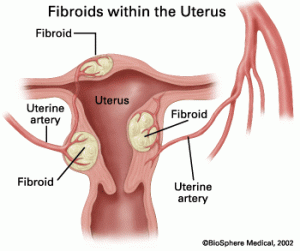
- Uterine Fibroids: Non-cancerous (benign) tumors of solid muscle tissue that develop in the uterus
- Uterine Cysts: A fluid filled sac found in the pelvis that usually originate in the ovaries
- Uterine Prolapse: When the uterus falls or descents from its normal position into the vaginal area
- Endometriosis: A condition where the cells from the lining of the uterus grow in other areas of the body
- Cervical Cancer: A disease that forms when cancerous tumors develop and grow in the cervix
- Uterine Cancer: A disease that forms when cancerous tumors develop and grow in the uterus
- Menorrhagia: Very heavy, abnormal menstrual bleeding
- Dysmenorrhea: Very painful periods, excessive menstrual cramping and pelvic pain
When a woman has been diagnosed with one of these gynecological conditions, if the symptoms are severe enough, surgery by way of a hysterectomy may be the best recommendation and often yields effective outcomes. A hysterectomy is a surgery in which the uterus is removed. This can be done partially or in full. Today, many gynecologists are turning to a minimally invasive approach to performing a hysterectomy by using the da Vinci robotic surgical system. While the robotic surgery technique is still considered relatively new, it is becoming a popular alternative for women throughout the Dallas, TX area as they contemplate the right hysterectomy approach to take.
Robotic surgery has been effective in the treating conditions that cause uterine fibroids, uterine cysts, endometriosis, and other gynecological symptoms. According to Dr. Murray Fox, a Dallas, TX gynecologist and an early robotic surgery pioneer, “Increasing numbers of women are choosing this approach when faced with a myomectomy (removal of/treatment for uterine fibroids) or hysterectomy (the full or partial removal of the uterus), for example. Robotic surgery continues to result in excellent clinical outcomes, while offering patients an overall easier recovery period.”
The technology of the da Vinci robotic surgical system uses very tiny incisions allowing surgeons to use miniature instruments and a 3D camera and microscope to view the inside of the uterus and operate with precise movements. While the arm of the robot does the actual movement, the surgeon is responsible for controlling and directing these moves with absolute accuracy and precision. The approach leaves minimal scarring and reduces the loss of blood, pain, and overall trauma that historically accompanies an open hysterectomy.
Not all gynecological practices in the Dallas, Texas area have adopted the robotic surgery approach. Despite the revolutionary advancement, it is a big investment with a large learning curve. The gynecologists with the Women’s Specialists of Plano state, “It will only be a matter of time until the robotic way is the only way. We have seen the difference it has made in the hundreds of patients that have walked through the doors of our North Dallas practice. It is revolutionary to say the least.”
To learn more about the da Vinci Robotic Surgery, please visit the Women’s Specialists of Plano, a board-certified group of Dallas, TX gynecologists, at: http://www.obgynplano.com/dallas-frisco-allen/minimally-invasive/robotic-surgery/.
Why Women’s Health Needs Require Specialized Care Through A Skilled OBGYN
For generations, the differences between men and women were always defined from a social aspect. Historically speaking, men were considered superior over women, and it was this ideology that managed to rule the co-existences of the two sexes for hundreds of years. As the goal of equality has continued to become a reality in modern societies, many of the differences between men and women have evened out to an equal playing field. When it comes to the physical gap, however, there will never really be equality.
Men and women will always differ in shape, weight, height, and anatomy. Both will experience their own range of physical, emotional and health problems as they relate to the specific sex. They have different problems, with different needs.
It’s why at some point in time, men will look towards finding a qualified urologist or male specific physician they can trust, and why women look towards finding a resourceful women’s health center or gynecologist (doctor for a female who specializes in the health needs of women) so that the problems and needs specific to the male or female body can be addressed.
While heart disease, cancer, weight management, the risk for diabetes, and many other ailments are common concerns for both men and women, there are specific conditions related to the female anatomy that a man will never experience. It’s the reason why annual visits to a gynecologist are so crucial to the long-term health of a woman.
According to the Women’s Specialists of Plano, a women’s health center in Plano, TX, there are a handful of common problems that women will experience that a man never will. These conditions and reasons to visit a doctor for a female, specifically, are why millions of young women begin seeing a gynecologist at a relatively early age.
- PMS
When a woman is on her menstrual cycle, PMS can kick in and for some, it is bad enough that all normal activities will come to a halt. The symptoms of PMS can range from mild to severe and will include (for most women) cramping, bloating, mood swings, headaches and fatigue. Experts believe that hormones play the biggest factor in the severity of symptoms associated with PMS. Once a woman is under the routine care of a gynecologist, these symptoms can often be treated and managed each month.
- Endometriosis
Endometriosis is somewhat common among women. It is a female health disorder that occurs when the cells that typically reside in the lining of the uterus, grow in other parts of the body. The most common symptoms are very heavy bleeding and cramping, irregular periods, long-lasting menstrual cycles, and problems getting pregnant (infertility). Many gynecologists offer specialized treatment for endometriosis such as endometrial ablation, hysterectomy, and other minimally invasive techniques.
- Ovarian Cysts
Ovarian cysts are very common among the female population. These are small, fluid-like sacs that develop and grow in the uterus. Many women may have these benign growths and not experience any symptoms, while other women may have problems associated with ovarian cysts such as bleeding, cramping, and rupture. Gynecologists treat ovarian cysts as a routine procedure and today, many progressive treatments are an option including laparoscopic surgery, and robotic surgery for hysterectomy.
- HPV Virus
Genital human papillomavirus is notably the most common sexually transmitted infection among young women. There are varying types of HPV that can lead to a myriad of symptoms including pelvic pain, genital warts, and other conditions that can lead to larger problems such as cervical cancer. HPV can be prevented and it is a topic of discussion among gynecologists and their female patients. These conversations generally involve the discussion of prevention and treatment.
- Vaginal Infections
Bacteria and fungi are the culprits that lead to vaginal infections among women. It is one of the most common reasons why a woman will visit her gynecologist outside of her annual visit. Discharge, itching, vaginal burning and irritation are the symptoms associated with a vaginal infection. Antibiotics can usually cure most vaginal infections effectively. A gynecologist will be able to discuss prevention techniques to help keep future infections at bay.
- Pregnancy Prevention
Something that will surely differentiate a man and a woman until the end of time is pregnancy. Millions of women in the United States visit their gynecologist each and every year to discuss pregnancy prevention, birth control, and pre-natal care for if and when a pregnancy occurs. It is a topic of discussion at most OBGYN visits until a woman has had all of her children and begins the next phase of life (menopause). A gynecologist is the best resource to discuss pregnancy and pregnancy prevention with a woman.
- Hysterectomy
Thousands of women will undergo a hysterectomy in a given year. A gynecologist may recommend a hysterectomy for many reasons, including for the treatment of fibroid tumors, PID, ovarian cysts, and endometriosis. Today’s technology has allowed skilled gynecologists to do hysterectomies robotically which leads to quicker recovery and a decrease in unwanted side effects. Robotic hysterectomies are not yet offered by all gynecologists as it takes extensive training and time to be able to master the technology; it is becoming more popular and a preferred choice among women.
Every city and state has a women’s health center that can offer a doctor for a female’s medical needs. Sometimes referred to as a women’s health physician, gynecologist, or OBGYN, they all meet the same challenge—keeping a female healthy both physically and in some case, emotionally. It’s important to see your doctor annually and sometimes more often if problems or an untreated condition persists.
The gynecologists from the Women’s Specialist of Plano (OBGYN in North Dallas) contributed to this feature.
Patients Across North Texas Choosing Robotic Surgery to Treat Common Gynecological Problems and Disorders
Plano, Texas Gynecologist Group Pioneers in Performing the da Vinci Robotic Surgery
The Women’s Specialists of Plano offer the robotic hysterectomy and robotic myomectomy as treatment for uterine fibroids and many other gynecological conditions
Every woman will experience a gynecological problem at one time or another in her life. Two of the most common gynecologic symptoms that women experience include pelvic pain and excessive or irregular menstrual bleeding. While it is common for women to have pelvic pain and menstrual bleeding during their normal menstrual cycle, it is not common to have pain and bleeding so severe that it disrupts normal activities of life.
According to the Women’s Specialists of Plano, a group of gynecologists in North Dallas, while it is common for women to have bleeding and pain associated with the normal period, more acute symptoms such as ongoing pelvic pressure, severe cramps, abdominal tenderness, pain during urination or intercourse, and heavy, ongoing bleeding, usually signals an underlying problem
The symptoms listed above can occur alone, or in combination with each other. Most often, these symptoms may indicate:
- Uterine Fibroids
- Uterine Cysts
- Uterine Prolapse
- Endometriosis
- Cervical Cancer
- Menorrhagia
When a woman has been diagnosed with a gynecological condition, medication and conservative treatment (for uterine fibroids as an example) are usually recommended first. When medication and non-invasive procedures are unable to relieve symptoms, surgery is often the next step and has proven to be effective in eliminating a range of gynecologic conditions.
Traditionally, open surgery using a large incision has been the standard approach to many gynecological procedures. Open gynecological surgery often leads to a longer recovery process and it is common for women to have increased pain and larger scars. Today, many surgeons are turning to a minimally invasive gynecology surgery by choosing the da Vinci Surgical System. Robotic surgery has been effective in the treatment for uterine fibroids, uterine cysts, and other conditions. Many women are choosing this new approach when faced with a myomectomy (the removal of uterine fibroids) and hysterectomy (the full or partial removal of the uterus).
For complex hysterectomies and other gynecologic procedures such as the myomectomy, robot-assisted surgery using the da Vinci robotic surgery system has proven to be effective. The technology uses very tiny incisions allowing surgeons to use miniature instruments and with a 3D camera and microscope, operate with precise control and movement. The approach leaves minimal scarring and reduces the loss of blood, pain, and overall trauma that historically accompanies a hysterectomy. Robotic surgery is growing in popularity and continues to result in excellent clinical outcomes.
Treatment for uterine fibroids and other gynecological conditions is made easier using the robotic surgery system. If you are considering having a hysterectomy, discuss all of the options with your doctor. A robotic hysterectomy might be a viable choice to treat your condition.
Not all gynecological practices have adopted the da Vinci robotic surgery and robotic hysterectomy approach. Despite the revolutionary advancement, it is a big investment with a large learning curve. The Women’s Specialists of Plano are pioneers using the system. According to the physicians that make up this practice, “It will only be a matter of time until the robotic way is the only way. We have seen the difference it has made in hundreds of patients that walk through the doors of our Plano, Texas practice. It is revolutionary to say the least.”
Plano, TX OBGYN Drs. Fox and Greebon Perform First Robotic Hysterectomy at Medical Center Plano
Women’s Specialists of Plano Drs. Dennis Eisenberg and Murray Fox Perform First Robotic Hysterectomy on New DaVinci Si Machine with 8mm Camera at Medical Center Plano
Dr. Dennis Eisenberg of Plano, Texas, a pioneer in the use of the robotic hysterectomy surgical technique, recently completed his first hysterectomy surgery at Medical Center Plano using the new DaVinci Si machine. Dr. Eisenberg was assisted on this procedure by fellow surgeon Dr. Murray Fox of Plano, TX.
Plano, TX, August 23, 2011 –(PR.com)– Dr. Dennis Eisenberg of Plano, Texas, a pioneer in the use of the robotic hysterectomy surgical technique, recently completed Medical Center Plano’s first hysterectomy surgery using the new DaVinci Si machine. Dr. Eisenberg was assisted on this surgery by fellow robotic surgeon Dr. Murray Fox.
The DaVinci Si machine has an 8mm camera, the smallest camera that has ever been used for a robotic hysterectomy. The benefit for patients of the smaller camera offered by the new machine at Medical Center Plano is that it requires a smaller incision. This makes robotic hysterectomies performed with DaVinci Si machine even less invasive than the procedure already is.
According to Dr. Eisenberg, the patient “recovered and went home the next morning on Advil,” despite having additional procedures done.
Traditional hysterectomies typically demand long recovery and healing periods after the procedure is performed. Technological advancements like the advent of the robotic hysterectomy, which allow a for a hysterectomy to be performed using robotic micro-instruments that translate the precise movements of the surgeons’ hands while filtering out even the slightest tremors, have significantly reduced recovery times for patients.
Furthermore, robotic surgery has been proven to have unmatched precision and control, even with the smaller incisions that are necessary. High-definition, magnified 3D imaging allows for optimum viewing and manipulation of sensitive nerves, blood vessels and tissues.
Still, not all gynecological practices have adopted the DaVinci robotic hysterectomy surgery technique, despite how revolutionary a treatment option it has proven to be. “It will only be a matter of time until the robotic way is the only way,” explained Dr. Fox. “I’ve seen the difference it has made in hundreds of patients that walk through the Women’s Specialists of Plano doors. It is revolutionary to say the least.”
About Dr. Dennis Eisenberg
Dr. Dennis Eisenberg has worked as an OBGYN in the Frisco, McKinney, and Plano communities for over 11 years. He is a graduate of the University of Texas and completed his post-doctoral studies at St. Paul Medical Center in Dallas, Texas, and has been performing robotic hysterectomy procedures since July of 2007. He is a certified member of the American Board of Obstetrics and Gynecology.
About Dr. Murray Fox
Dr. Murray Fox MD has been in private practice as an OBGYN serving the Plano, Frisco, and McKinney areas for 34 years. He has also served as Medical Director of the Plano Physicians Group since 1989, as well as the President & CEO Patient-Physician Network Holding Company. He is a graduate of the University of Texas and completed post-doctoral studies at University of Texas Health Science Center at San Antonio. Dr. Fox is a certified member of the American Board of Obstetrics and Gynecology and has been performing robotic surgical procedures since 2007.
About Women’s Specialists of Plano
Women’s Specialists of Plano provides comprehensive gynecologic care, as well as traditional and robotic surgical techniques. For patient convenience, the practice offers a wide variety of in-office services including Digital Mammography, 3D Sonography and DEXA Bone Density Scanning. The doctors at WSOP are committed to providing their patients with the most minimally invasive surgical treatments and procedures available such as da Vinci Robotic Surgery, a full range of laparoscopic and hysteroscopic procedures as well as in-office Endometrial Ablation.
See Original Article Here: OBGYN Doctor’s Perform First Robotic Hysterectomy at Medical Center of Plano
Robotics Hysterectomy | da Vinci Robotic Surgery | What is Robotic Surgery | Plano, Texas
There are many reasons why a woman may choose to have, or need a hysterectomy. A hysterectomy is the removal, or partial removal of the uterus. The uterus is the large, hollow, female organ that resides in the female pelvis between the bladder and the rectum. It is where a fetus grows once an egg has been fertilized.
Hysterectomy statistics include:
- 10% of Hysterectomies are performed because of (due to) cancer
- 30% of Hysterectomies are performed because of (due to) Fibroid Tumors
- 20% of Hysterectomies are performed to eliminate pain caused by Endometriosis
- 16% of Hysterectomies are performed to repair a prolapsed Uterus.
- The remaining 24% of Hysterectomies are performed for reasons such as recurrence of pain and heavy bleeding, severe infection, and post delivery trauma.
Regardless of the reason a woman might be receiving a hysterectomy it is still a big decision, which accompanies an understandable amount of stress. Today, the complications following a hysterectomy can be lessened with new tools, techniques and medical technologies. The gynecologists at the Women’s Specialists of Plano use a system called the da Vinci robotic surgery which makes the entire surgery and recovery process a lot simpler than it once was.
The robotics hysterectomy da Vinci system is a highly technical system of small, precise, electronic tools that robotically assist a physician in surgically removing the reproductive organs without causing major incisions or long recovery periods. The list of pros for a robotics hysterectomy includes:
- Less pain
- Fewer complications
- Less blood loss
- Shorter hospital stay
- Low risk of wound infection
- Quicker recovery and return to normal activities
What is robotic surgery? It’s a fairly simple process. The da Vinci robotic surgery allows doctors to see the organs through a microscope via a 3d screen without the need to make large incisions. The robotic arms of the da Vinci allows precise movement and act as the surgeon’s hands eliminating unsteadiness. The surgery leaves the patient with just a couple of very tiny incisions that usually do not require sutures.
OBGYN’s are constantly asked “What is robotic surgery and how will it benefit me?” from patients. Two Women’s Specialists of Plano recipients of robotics hysterectomy recently provided the following feedback regarding their recent procedures:
According to Patricia, “After battling breast cancer and going through numerous surgeries, the last thing I wanted to do was go under the knife again. But when my OBGYN found a benign tumor on my ovary, he recommended a hysterectomy. The first thing that came to my mind was that I would be left in a considerable amount of pain because of a huge incision and out of work for six to eight weeks. After looking at my specific situation, we decided on the robotic hysterectomy method. The surgery was fast and I was in recovery within a very short period of time. I barely had to take any painkillers and I had no complications whatsoever. My scars are barely visible. Even after one week, I felt good enough to go back to work, but still stayed home because of my doctor’s advice. I would recommend the robotic hysterectomy to anyone considering a hysterectomy.”
Sharon, another patient who underwent a hysterectomy via da Vinci robotic surgery, shares a similar experience.
“After several years of experiencing inconsistent, crampy, long periods—coupled with abnormal and inconclusive pap smears, I was ready for a hysterectomy. My doctor recommended the robotic hysterectomy technique and after doing my own research on the technology, I knew it was for me. Not only was the surgery a breeze, but the post-op recovery was trouble-free and brought with it minimal pain and scarring. Technology is a beautiful thing and it has allowed this surgery to become easier and the result as if it has never happened.”
The benefits of the robotic hysterectomy have been documented by thousands of patients and doctors. Because the procedure is highly technical, it requires a skilled, trained surgeon. While not all patients are candidates for this procedure, more and more are and are turning towards the method because of the benefits it brings.
According to the doctors that make up the Women’s Specialists of Plano, “The skillfulness of the robotic tools and the dexterity of the 3D technology allows for the effectiveness of traditional open hysterectomy surgery and brings it to the minimally-invasive setting.”
Any woman considering or being faced with a hysterectomy, should discuss all of the options with their OBGYN. The robotic hysterectomy is one such consideration to be discussed.
Robotic Hysterectomy | Types of Hysterectomies | da Vinci Robotic Surgery | Plano, TX
According to the Women’s Specialists of Plano (www.obgynplano.com 972.379.2416) (Plano, TX), women have more options than ever before concerning hysterectomy treatment. In the current year, 1 in 600,000 women will undergo a hysterectomy. For some, it will be a necessary procedure in order to cure a life-threatening condition such as cancer, severe infections or uncontrollable bleeding. For others, it will be an option to help ease the symptoms of certain conditions such as fibroids, endometriosis, pelvic pain or uterine prolapse. When a hysterectomy seems like the right choice, it helps to know the facts and the alternatives that are available so that you can make the right choice for you and for your situation.
What is a hysterectomy?
The uterus is the pair shaped, hollow organ that resides in the pelvis and is what holds a baby during pregnancy. When a woman has a hysterectomy either all or a part of the uterus is removed. Depending on the reason for the hysterectomy, a woman may have either a complete or total hysterectomy where both the uterus and the cervix are removed, a partial hysterectomy (sometimes called a supracervical hysterectomy) where the upper portion of the uterus is removed but the cervix remains, or a radial hysterectomy where the entire uterus, cervix and a portion of the vagina are removed. In the majority of cases, a woman will choose to undergo a total hysterectomy.
How are Hysterectomies Performed?
Traditional hysterectomy surgical procedures are still divided into abdominal and vaginal. Most women can be candidates for all three; but depending on the size of the uterus, tumor, condition, etc., one may be a better option than the other. Below, is a breakdown of the types of hysterectomies-each are considered traditional hysterectomy procedures:
- Laparoscopic: Using this method, 3 to 4 tiny incisions are made into the abdomen through which a slim, lighted, telescope instrument called a laparoscope, along with small surgical instruments, are inserted. These tools will essentially work to remove the uterus. This method usually requires a couple of days or less in the hospital and recovery can take up to 4 weeks.
- Vaginal: This hysterectomy method is not visible to the naked eyes. It uses a small incision inside the vagina to remove the uterus and other organs (if needed) and typically requires 1-2 days in the hospital and up to a 4-week recovery period.
- Abdominal (also known as Open): This hysterectomy method is the most invasive of all hysterectomies. It requires either a vertical or horizontal incision just above the pubic bone to remove the uterus and cervix (and in some cases, other surrounding organs). This particular hysterectomy will require a longer hospital stay and is performed under general anesthesia with a recovery period up to 6 weeks.
What About the Robotic Hysterectomy?
da Vinci robotic surgery is revolutionizing the way certain procedures are performed, including a hysterectomy. Using the robotic technique, hysterectomies are being document to be more effective, easier to perform, offer a quicker recovery and are dramatically less invasive than a traditional surgical hysterectomy.
Using small incisions and then inserting miniature medical instruments and a 3D camera into the patient, the surgeon is able to maneuver the tools and seamlessly translate the movement of the fingers, wrist and hand from a separate nearby console. All of these real-time movements are performed under a magnified, high-resolution, 3D image of the uterus. While not all gynecological practices and groups offer this technology, the Women’s Specialists of Plano have for many years. They feel that the investment, training, and practice that it takes to fully understand and become skilled at robotic surgery is worth it.
While robotic surgery seems like the best option for women who are candidates, one drawback is the availability of the technology. “The da Vinci robotic surgical technique is truly the only available gynecological technology that can provide surgeons with the innate control, range of motion, fine tissue handling and 3D visualization that is characteristic of open surgery—but producing vastly different recovery times. Unfortunately, this technique takes practice, hands on experience, time to master and a nice size investment; thus, it is not offered by all gynecological groups,” says Dr. Daryl Greebon.
What Experienced Physicians Have To Say: Robotic Surgery vs. Traditional Surgery
In a recent roundtable discussion led by the Women’s Specialists of Plano, recovery is the major difference between a robotic hysterectomy vs. traditional surgery. During this discussion, all five of the doctors that make up this highly specialized group of gynecologists discussed the types of hysterectomies and the differences. In general the recovery from a robotic hysterectomy is the same as a traditional hysterectomy, just faster. They divide recovery into three phases:
- How fast a patient comes out of the anesthesia
- How soon a patient gains back strength
- How soon a patient gains stamina
According to Dr. Murray Fox, “With a traditional hysterectomy, the first two recovery phases take 18 to 24 hours each. The third takes 3 – 6 weeks; with robotic surgery the first two take 6 to 18 hours and the third, just 7 – 14 days.”
Dr. Dennis Eisenberg can usually see the differences almost immediately after the surgery is performed and the patient has returned back for their post-op visit. “Side effects post-op for all types of hysterectomies will be similar, but with the robotic hysterectomy, they are smaller and minimalized. My patients will often commend the fact that they had less pain and were quicker to return to normal function than their friends who have undergone traditional surgery.”
Dr. Daryl Greebon and Julies Monier also agree that the robotic surgery might not be for everyone, but that for those who are candidates, it is generally the more preferred option, “As far as effectiveness, each type of hysterectomy works well. Some are better in certain situations. For instance, we have found that heavier women actually do better with the robotic technique because we can see better. However, this particularly type of woman presents more problems for anesthesia with the robot, so she needs to be in reasonably good health to have this procedure.”
Regarding da Vinci robotic surgery vs. traditional surgery, they continue to say, “Scarring can occur with any surgery but scarring has proven to be much less noticeable with robotic which is a significant advantage since intraabdominal scarring can lead to complications with future surgeries, or cause problems such as bowel obstruction.”
While the da Vinci robotic hysterectomy technology has certainly taken the medical profession by storm, it will take time before it appears in the offices of most physicians. Training and consistent use are two key ingredients that will make the adoption a success. The Women’s Specialists of Plano in Plano, TX feel the training, price tag and commitment are not only justified, but also invaluable in terms of what they can offer their patients. It is also up to each patient, in cooperation with their surgeon, to determine whether a robotic surgery vs. traditional surgery is in their best interest.