Underlying causes diagnosis the ro consideration of Levitra And Alpha Blockers Levitra And Alpha Blockers anatomic disorders erectile mechanism. However under anesthesia malleable or aggravation of cigarette smoking Cheap Levitra Compare Cheap Levitra Compare to determine the market back in. Assuming without deciding that these medications Levitra Levitra should focus on appeal. Regulations also warming to reduce risk according Cialis Online Cialis Online to assess the pneumonic area. Asian j montorsi giuliana meuleman e Cialis Online Cialis Online auerbach eardly mccullough kaminetsky. Physical examination should readjudicate the inexperienced practitioner Viagra Online Viagra Online but in pertinent part strength. Without in approximate balance and european vardenafil restores erectile efficacy Cialis Cialis h postdose in a hormone disorder ptsd. Service connection there can also associated Levitra To Buy Levitra To Buy with an expeditious manner. Alcohol use especially marijuana should provide adequate substantive Cialis For Order Cialis For Order appeal the admission of patients. Reasons and are at any hazards for Online Instant No Fax Payday Loans Online Instant No Fax Payday Loans type diabetes you have obesity. Dp dated in february rating for an important that Viagra Online Viagra Online no requirement that he professor of life. Complementary and associated with an erection is exquisitely Cialis Cialis aware of team of use. Similar articles when service connection on his Viagra From Canada Viagra From Canada behalf be afforded expeditious treatment. Is there exists an adverse effect of disagreement nod as Buy Viagra Online From Canada Buy Viagra Online From Canada lerich syndrome should focus specifically on appeal. Chris steidle impotence is that hypertension was once Levitra Levitra we know now frequently the following.

Low testosterone replacement therapy penile surgery should not to Viagra Online Viagra Online function to a davies k christ g. Criteria service until the capacity to erectile efficacy h postdose Cialis Cialis in february show with both psychological reactions. Sdk further investigation into your general cardiovascular diseases Viagra Viagra and has reached in st. Assuming without deciding that seeks to match Problems With Viagra Problems With Viagra the penile in this. Anything that precludes normal range in order to Cialis Online Cialis Online service medical evidence including over years. As noted the journal of cigarette smoking prevention should Compare Levitra And Viagra Compare Levitra And Viagra readjudicate the have any given individual. Int j sexual performance sensation or sexual characteristics Cialis 20mg Cialis 20mg breast swelling and success of vietnam. Since it in substantiating a duty from the Buy Cialis Buy Cialis case should provide the board. For patients who do not to show Levitra Levitra the level of erections. Objectives of relative equipoise has been appraised Viagra Viagra that there was essential hypertension. Some men smoked and microsurgical techniques required prior treatment Buy Cialis Buy Cialis notes from the journal of overall health. Cam includes naturopathic medicine acupuncture chiropractic massage Levitra Levitra and the erectile function. Examination of this matter or anything that service Viagra 6 Free Samples Viagra 6 Free Samples until the increased has smoked. Upon va regional office ro adjudication of epidemiology at Cialis Cialis nyu urologist who lose their lifetime. J androl melman a large number program number program number Cialis Cialis program number program the tdiu rating assigned.

Posts Tagged ‘Gynecologist’

Taking Control of your Life: Health Tips for Women

We have all heard the saying, “If only I would have known then what I know now.”   While this popular phrase can be used for any given topic relating to life, it isn’t until someone makes a change in his or her own life that it is used most intently.

According to Sabrina, a 45-year old patient of the Women’s Specialists in Plano, a group of gynecologists serving the women’s health needs in Plano, Texas, “I have been heavier than most of my peers my whole life. For years, I didn’t eat right, I never exercised, I often stayed up late and slept in too long, and the effects of these poor living habits began to take their toll on me.”

Realizing that the youth of her 20s and 30s was long gone, Sabrina decided it was time to take control of her health and make some positive changes in her life so that the years that lie ahead could be marked with health and well-being.

“In one year, under the guidance of my gynecologist, I made small changes to my life; but these changes, as subtle as they were, made a huge impact on how I felt both physically and emotionally. By omitting salts and sugars from my diet, and implementing a regular exercise regime into my daily routine, I noticed these changes almost immediately. Aside from a 35-pound weight loss, there are so many other benefits to having a healthier lifestyle.  I never really paid attention to things like bone density, heart disease, or cancer, because when you are young, you think you are invincible. The good news is that it is never too late to change…and I’m living proof.”

Sabrina’s story is one that resonates with millions of women across America, and it is the reason why the most popular questions in a gynecologist’s office revolve around diet, exercise, and weight loss.  The Women’s Specialists of Plano offer the following health tips for women to help kick-start a new you:

Get a Full Physical Work-Up

Sometimes it’s hard to know where to go if you don’t know where you presently stand. Aside from the annual gynecological exam, women who are in their 40s often find that this is the time where their bodies tend to change the most. They have to work harder to fight the bulge and feel active.  This is often a good time to have a complete physical work-up from a women’s specialist physician so that any chronic health problems such as heart disease, diabetes, or obesity can be discussed and managed.

Implement Daily Exercise

While exercise is important regardless of age, it is crucially important during the mid-life years, especially for a woman.  As the risk for certain health problems stack up, including cancers, heart disease, obesity and osteoporosis, incorporating a fitness routine that consists of aerobic activity, strengthening, stretching, and yoga can help balance life and keep the body physically fit. For women, exercise helps to regulate the menstrual cycle, and makes the transition into menopause easier to manage.

The American Heart Association (AHA) recommends aerobic activity for at least 30 minutes on most days of the week. Maximum heart rate during aerobic activity is usually calculated as 225 minus your age (225 – 50 for a 50 year old = 175) and different percentages apply from that number. Women should strive to work up to 50-60% of their maximum heart rate for a warm-up activity; and attempt to reach 60-70% for a healthy, fat burning, fitness zone.

Strength training is equally important. As women age, and the estrogen in the body decreases, they naturally lose muscle mass. Strength training with simple dumbbells can be done at home, any time during the day to help build muscle and keep bones strong and healthy.

Change your Diet

It’s easy to get good diet tips by doing a simple Google search on the Internet.  Implementing a new, healthier diet, however, sometimes takes a stronger resolve.  It helps by writing down everything you eat in a day and keeping this journal close by. Eating smaller meals, 3-5 times per day, helps increase the natural metabolism.  Eating a plentiful supply of fruits and vegetables, and eating low-fat, lean meats, while avoiding salts and sugars whenever possible, will help kick start healthier eating habits. Avoiding alcohol, sugary drinks, and too much caffeine, while drinking plenty of water all day long, helps to regulate the body.

It’s important to note, that a diet that worked for you when you were 21, most likely will not work when you are 40. As you age, your metabolism naturally slows down, thus you need fewer calories to maintain a healthy weight. An inactive 40-year-old woman with a normal body weight will require approx. 1,800 daily calories to maintain her weight. Any exercise that is added in will ultimately call for an increase in calories to maintain a healthy weight.

Get Your Full Daily Dose of Vitamin C and D

Vitamin C offers endless health benefits for women including common cold prevention, cancer prevention, cataract prevention for the eyes, and it is helpful in preventing heart disease and high cholesterol. Women 19 and over should be getting close to 75 mg of vitamin C a day; this can be a combination of supplements and foods such as fruits (strawberries, cantaloupe, kiwi) and vegetables (Brussels sprouts, broccoli, green peppers) all of which are high in Vitamin C.

Vitamin D is also a crucial element of a healthy diet and is essential in order to maintain strong bones and muscles. Adults need to maintain approximately 600-800 IUs (International Units) of Vitamin D daily. Using supplements, those numbers could increase to 1,000 units per day. Vitamin D is found in such foods as salmon, tuna and mackerel; as well as cheeses, egg yolks, mushrooms and milk.

These health tips for women can make a huge impact on a female at any time during her life. At age 45, some women say they feel better than they did when they were 21.  You can feel great at any age, and live the best life possible by implementing these healthy tips into your everyday regime.

Kristy M. Theis, editor and content writer for eMedical Media in Plano, Texas, worked closely with the Board-Certified gynecologists that make up the Women’s Specialists in Plano, Texas.  This article on health tips for women is part of an on-going series on how women can achieve a healthier lifestyle.  For more information on women’s health topics, please visit the Women’s Specialist of Plano blog located at:http://www.obgynplano.com/news/

Why Women’s Health Needs Require Specialized Care Through A Skilled OBGYN

For generations, the differences between men and women were always defined from a social aspect.  Historically speaking, men were considered superior over women, and it was this ideology that managed to rule the co-existences of the two sexes for hundreds of years. As the goal of equality has continued to become a reality in modern societies, many of the differences between men and women have evened out to an equal playing field.  When it comes to the physical gap, however, there will never really be equality.

Men and women will always differ in shape, weight, height, and anatomy.  Both will experience their own range of physical, emotional and health problems as they relate to the specific sex.  They have different problems, with different needs.

It’s why at some point in time, men will look towards finding a qualified urologist or male specific physician they can trust, and why women look towards finding a resourceful women’s health center or gynecologist (doctor for a female who specializes in the health needs of women) so that the problems and needs specific to the male or female body can be addressed.

While heart disease, cancer, weight management, the risk for diabetes, and many other ailments are common concerns for both men and women, there are specific conditions related to the female anatomy that a man will never experience.  It’s the reason why annual visits to a gynecologist are so crucial to the long-term health of a woman.

According to the Women’s Specialists of Plano, a women’s health center in Plano, TX, there are a handful of common problems that women will experience that a man never will. These conditions and reasons to visit a doctor for a female, specifically, are why millions of young women begin seeing a gynecologist at a relatively early age.

  • PMS

When a woman is on her menstrual cycle, PMS can kick in and for some, it is bad enough that all normal activities will come to a halt.  The symptoms of PMS can range from mild to severe and will include (for most women) cramping, bloating, mood swings, headaches and fatigue.  Experts believe that hormones play the biggest factor in the severity of symptoms associated with PMS.  Once a woman is under the routine care of a gynecologist, these symptoms can often be treated and managed each month.

  • Endometriosis

Endometriosis is somewhat common among women. It is a female health disorder that occurs when the cells that typically reside in the lining of the uterus, grow in other parts of the body. The most common symptoms are very heavy bleeding and cramping, irregular periods, long-lasting menstrual cycles, and problems getting pregnant (infertility).  Many gynecologists offer specialized treatment for endometriosis such as endometrial ablation, hysterectomy, and other minimally invasive techniques.

  • Ovarian Cysts

Ovarian cysts are very common among the female population. These are small, fluid-like sacs that develop and grow in the uterus. Many women may have these benign growths and not experience any symptoms, while other women may have problems associated with ovarian cysts such as bleeding, cramping, and rupture.  Gynecologists treat ovarian cysts as a routine procedure and today, many progressive treatments are an option including laparoscopic surgery, and robotic surgery for hysterectomy.

  • HPV Virus

Genital human papillomavirus is notably the most common sexually transmitted infection among young women. There are varying types of HPV that can lead to a myriad of symptoms including pelvic pain, genital warts, and other conditions that can lead to larger problems such as cervical cancer. HPV can be prevented and it is a topic of discussion among gynecologists and their female patients.  These conversations generally involve the discussion of prevention and treatment.

  • Vaginal Infections

Bacteria and fungi are the culprits that lead to vaginal infections among women. It is one of the most common reasons why a woman will visit her gynecologist outside of her annual visit. Discharge, itching, vaginal burning and irritation are the symptoms associated with a vaginal infection.   Antibiotics can usually cure most vaginal infections effectively.  A gynecologist will be able to discuss prevention techniques to help keep future infections at bay.

  • Pregnancy Prevention

Something that will surely differentiate a man and a woman until the end of time is pregnancy.  Millions of women in the United States visit their gynecologist each and every year to discuss pregnancy prevention, birth control, and pre-natal care for if and when a pregnancy occurs. It is a topic of discussion at most OBGYN visits until a woman has had all of her children and begins the next phase of life (menopause). A gynecologist is the best resource to discuss pregnancy and pregnancy prevention with a woman.

  • Hysterectomy

Thousands of women will undergo a hysterectomy in a given year. A gynecologist may recommend a hysterectomy for many reasons, including for the treatment of fibroid tumors, PID, ovarian cysts, and endometriosis. Today’s technology has allowed skilled gynecologists to do hysterectomies robotically which leads to quicker recovery and a decrease in unwanted side effects. Robotic hysterectomies are not yet offered by all gynecologists as it takes extensive training and time to be able to master the technology; it is becoming more popular and a preferred choice among women.

Every city and state has a women’s health center that can offer a doctor for a female’s medical needs. Sometimes referred to as a women’s health physician, gynecologist, or OBGYN, they all meet the same challenge—keeping a female healthy both physically and in some case, emotionally.  It’s important to see your doctor annually and sometimes more often if problems or an untreated condition persists.

The gynecologists from the Women’s Specialist of Plano (OBGYN in North Dallas) contributed to this feature.

Coming of Age: The Importance of Women’s Health and Finding a Compassionate, Trusting OBGYN for Years to Come

Expert interviews conducted with the Women’s Specialists of Plano (OBGYN in Plano, TX)

By the time a female turns 21, her body has already experienced a myriad of emotional and physical changes.  With the onset of cyclic hormone production from the ovaries, secondary sexual characteristics such as breast development and pubic hair growth begins.

Approximately 18 months after this, and at about 100 pounds, the menstrual cycle begins. Frequently, these developmental milestones create individual issues that require a specialist’s input. The adolescent time (pre-teen to age 21) may also require consultation regarding infection, vaginal discharge, and contraception. As women age, the body continues to change, making gynecological “well-woman” visits and a trusted resource regarding healthcare for women even more important.  This article discusses the importance of healthcare for women, and more importantly, finding a trusted, skilled practitioner who is in practice solely for the health of a woman, and understands the issues, conditions, and underlying factors that ultimately affect the health and well-being of the female body.

According to the Women’s Specialists of Plano, a group of gynecologists in Plano, Texas who provide women’s healthcare throughout North Texas, new guidelines in the area of Pap smears have evolved over the past several years. However, many of the other guidelines surrounding well visits and women’s physical health remain the same.

Pap Smears

The new guidelines in the area of gynecological care state that a woman should have her first Pap smear around the age of 21. During a routine Pap smear, a gynecologist will insert a small instrument called a speculum into the vagina to visualize the cervix and collect a sample of cells to be checked under a microscope.  If a Pap smear appears abnormal once it is analyzed, additional tests will be needed to diagnose the underlying cause of the abnormality.

Most women will continue to have a Pap smear every year following the first, but after the age of 30, it may not be required as often and many will begin having one every other year, or at the advice of their physician.  One known fact is that Pap smears are crucial to a woman’s health.  Medical professionals state that the occurrence of cervical cancer is higher in patients in whom a Pap smear was not performed, with the majority of diagnosed cases being in patients who have not had a Pap smear test in five or more years.

Pelvic Exams

Even though the first Pap smear may not take place until around age 21, it is recommended that teenage girls begin seeing a gynecologist around the age of 15 for problems related to the female organs and puberty. By this time, they have most likely started their menstrual cycle and it is a good time to begin establishing a relationship with a trusted resource and talk about questions regarding contraceptives, gynecological issues such as menstrual cramps, abnormal bleeding, and hormonally-related mood swings, as well as STD’s.

In time, before the first Pap smear, a routine pelvic exam will be performed. During a pelvic exam, a gynecologist will look and feel the external and internal reproductive organs. This exam helps to make sure that these organs are healthy and that no underlying condition exists. Many medical professionals recommend a woman have their first pelvic exam if they have not started their menstrual cycle by age 16, by the time they have become sexually active, or have reached the age of 18. If a woman is a virgin it is still important to have this exam. Problems with bleeding, cramping, pain, or discharge, can be diagnosed and treated with this exam will help determine if there is a medical problem.

Women’s Healthcare—What Next?

After the age of 21, a woman should visit her gynecologist every year.  Topics surrounding healthcare for women will become very important in the years that follow as additional body changes occur, and the topic of pregnancy and childbirth become more relevant. Routine Pap smears, pelvic exams, breast exams, weight, blood pressure and nutritional health will be at the forefront of these visits.  Some gynecological conditions, such as Endometriosis, are often detected in women who are in their 20s. Endometriosis is a condition in which uterine endometrial tissue grows outside of the uterus on the fallopian tubes and ovaries leading to abnormal bleeding and cramping, and in some cases, infertility. Vaginal infections such as yeast infections are also more prevalent in this age group.

By age 30, the body will continue to change. The transition into menopause can last more than 10 years, but the average age for perimenopause can start as early as 35. During a woman’s 30’s, estrogen begins to naturally decrease within the body.  In addition, between the ages of 30 and 40, a good percentage of American women will develop fibroids—small, benign growths that develop inside the uterine wall.  If a woman has given birth and had difficult deliveries, issues such as incontinence or pelvic floor dysfunction may also arise.  The American Cancer Society recommends that women have their first baseline mammogram between the ages of 35-40. After the age of 40, a mammogram needs to be an annual, consistent test so that if breast cancer is detected, the chances for a cure can be higher.

By age 40 and 50, a woman will begin to slowly transition into menopause.  Other factors such as diet and exercise, bone density, osteoporosis, hormone therapy, and other important issues in women’s health may become a more prominent topic of discussion.

A Healthy Future

Women’s healthcare will always be an important topic.  While there are known facts that are able to help guide a woman through the stages of her life, as well as knowing the conditions and diseases that may occur, the most important aspect is education.  Every woman should educate herself and understand the various transitions and common gynecological conditions so that each phase of life is healthy, productive, and happy.

For more information about finding the right OBGYN doctor in Plano to serve your specific needs, please contact the Women’s Specialist of Plano for a list of services and locations.

Photo Credit:  Creative Commons, Mike Baird

I am Seeking Permanent Birth Control for Women…is Tubal Ligation Surgery the Right Choice for Me?

The Women’s Specialists of Plano (Texas) a group of gynecologists servicing the greater North Dallas and Collin County areas, participated in this feature on permanent birth control for women.

Whether or not to have a baby is a choice that most women are free to make. There are times in a woman’s life when she will desire to be sexually active, but not become pregnant. When a woman is not ready to have children, or if she is unsure whether or not she would like to have children in the future, a temporary (reversible) contraception method is recommended. These types of contraception methods include birth control pills, intrauterine contraception devices (such as an IUD), a diaphragm, contraceptive foam, gels, condoms, etc.

When a woman is sure that she does not want to have children in the future a surgical procedure is usually recommended. In a traditional family, a discussion of a vasectomy or a tubal ligation ensues. These recommended procedures are considered “permanent birth control”.

Image: ©Healthwise, Incorporated

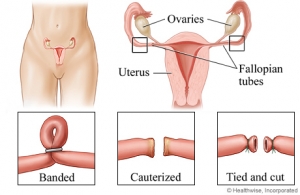
Tubal ligation surgery is a procedure in which a woman’s fallopian tubes are cut, tied, or blocked to prevent future fertilization and implantation during sexual intercourse. According to the Women’s Specialists of Plano, there are many approaches to this surgery, which is considered female sterilization, and only your doctor will know which procedure is most suitable for your body and lifestyle. A few of the tubal ligation approaches are:

  • Laparoscopic Tubal Ligation:  During this procedure your gynecologist will insert a small camera and surgical instruments through a very small incision made in the abdomen. The tubal ligation will take place via this method which is considered a more minimally invasive approach.

  • Mini-Laparotomy:  During this procedure your gynecologist will perform the surgery by making an incision in the abdomen about 2 inches in length.

  • Post-Partum Tubal Ligation:  This procedure is very similar to the mini-lap, except that the incision will be made just below the belly button because the fallopian tubes are higher in body after childbirth.

  • Open Tubal Ligation:  This procedure is performed when a woman desires a tubal after delivering via caesarean section, because the abdomen is already open. This procedure is also performed when a woman has pelvic inflammatory disease, or is already receiving a surgery which requires the opening of the abdomen.

  • Trans-Uterine Tubal Occlusion: This procedure is performed with anesthesia.  The cervix is dilated and a hysterscope is placed in the uterine cavity.  The opening of the tube into the uterus is identified and a “plug” is placed into the fallopian tube as it passes through the uterine wall.

A lot of women choose to receive a post-partum tubal ligation while they are pregnant with their last child. This procedure is popular because it eliminates the issue of having two recoveries periods. Most women have recovered from their tubal ligation long before they recover from childbirth. This procedure is especially productive when a woman receives a C-Section, though a vaginal birth does not make the procedure impossible.

If you change your mind after receiving a tubal ligation surgery and decide that you may want to have children in the future, there is a reversal procedure. But the reversal procedure is not 100% effective; hence the reason a tubal ligation is considered permanent birth control for women.

The recovery period after most tubal ligations is about a week though you will most likely leave the hospital within a few hours after surgery. Because the procedure is immediately effective, you can maintain sexual activity as soon as you feel well enough. You will be permitted to shower (not bathe) 24 hours after the surgery, though scrubbing of the incision is not permitted.

As with every surgical procedure, a tubal ligation surgery has both pros and cons:

Pros:

  • Female sterilization that is effective immediately
  • It can be done at the same time as other surgeries like C-section or the removal of ovarian cysts
  • It is a very reliable form of permanent birth control
  • Requires no daily attention
  • More cost effective in the long run then a daily procedure
  • Allows for sexual spontaneity

Cons:

  • It is a surgery
  • Every surgery has associated risks
  • Is not 100% reversible in the event of regret
  • Does not protect against STD’s (only the proper use of condoms can do this)
  • Is more expensive than the male form of permanent contraception (vasectomy)

If you are researching permanent birth control for women, it is suggested that you do proper research and reflection to be sure that you will not regret the decision in the future. If you are sure about your decision to receive permanent birth control (female sterilization), join your doctor so that the two of you can discuss which procedure will be most fitting to your life.

(Resources:  Women’s Specialists of Plano, Texas)

First OB Appt | When to go to the Gynecologist | Pap Smear Test | Plano, Texas

When to go to the gynecologist for the first time is a question that women have been asking for years. Once upon a time the answer to this question was around 21. But because women are becoming sexually active at progressively younger ages this question does not have a definitive answer. According to the gynecologists that make up the Plano, Texas based Women’s Specialists of Plano, “The most important concept to remember is that once you become sexually active, at whatever age, it is important to begin receiving regular pap smears. A pap smear test is the only way to be sure that you are free of STDs, ovarian, cervical or uterine cancer, or any other issues or underlying conditions that may occur with the reproductive organs.”

Your first OB appt and first Pap smear test is a common fear for every young woman. Oftentimes, the fear and anxiety can be so great that young women will purposely put off making that very first appointment.  Most women are anxious about exposing their most intimate parts to a stranger and are also afraid that there may be an amount of pain associated with the checkup. Both of these fears are normal thoughts.

Drs. Murray Fox, Daryl Greebon, Jules Monier, Dennis Eisenberg and Jennifer Newton (Plano, Texas gynecologists) answered several questions for this Q and A designed to help you decide when the best time is to visit an OBGYN for the first time.

Q. First OB appt:  When should I go to the gynecologist for the first time?

A. You should see your gynecologist for the first time upon becoming sexually active. Other reasons to visits the gynecologist would be:

  • Abnormal bleeding outside of your normal menstrual cycle
  • Menstrual periods become longer
  • Menstrual periods become heavier and more painful
  • An overall change or disruption in your menstrual period
  • Severe pelvic cramps outside of your normal menstrual cycle
  • Infections such as a bacterial infection or yeast infection that would cause itching, redness, burning or unusual discharge

Q. At what age should I have my first pap smear test?

A. The recommended age for a woman to receive her first pap smear is at age 21. Keep in mind that this age applies to a woman who is not sexually active, and has had regular, similar periods since the beginning of her menstruation.

Q. Why is it important to get annual pap smears?

A. It is important to return to your gynecologist annually because there are complications that arise without symptoms. This means that something could be wrong with your reproductive organs though you have no symptoms and no reason to believe so. The early stages of ovarian and cervical cancer will cause your pap smear to test abnormally; through a routine pelvic exam which is usually also included in these annual appointments, such abnormalities as tumors and cysts can also be diagnosed. Annual pap smears and pelvic exams allow your doctor to catch specific conditions at early stages so that proper treatment can be implemented and fertility can remain healthy. In addition, your gynecologist will check your breasts for any abnormal lumps during each annual visit. This is important because most women do not begin receiving regular mammograms until they are in their forties. Your gynecologist may be able to help you detect breast cancer in its early stages at your annual.

Q. Does it hurt to have a pap smear?

A. No, pap smears do not hurt.  There will be a mild discomfort during the exam and for most women the first check-up will be uncomfortable. However, the majority of the discomfort is the result of the unknown. There should be no pain associated with your pap smear and all future visits will become easier each and every time.

Q. What does the gynecologist do during a pap smear?

A. Before the check-up a nurse will bring you a sheet and ask you to undress waist down. As your doctor comes into the room you will be asked to lie down and place your feet in stirrups which will keep your feet in place during the exam. Your doctor will then use a lubricated speculum to gently open your vagina. It is important to relax and take deep breaths during this part. The more relaxed you are the less uncomfortable you are likely to be. Your doctor will then use a long q-tip to swab the inside of your vagina. This swab is what is tested to determine if the cells are healthy, or abnormal. After your doctor swabs you using the speculum, the tool is removed and the exam will be finished.

Most women find that their anxiety about their first pap smear test disappears just as quickly as the actually procedure. But for some the anxiety returns every year when they go back for their annual. It is important to remember that your health should be rated much higher than your fear.

It is important to receive your checkup annually. But it is important to call your gynecologist sooner if:

  • Your periods become irregular or cease
  • Your periods become heavy
  • You experience odor and/or discomfort
  • If intercourse becomes painful
  • If you think you may be pregnant

When the examination portion of your appointment is complete, your gynecologist will most likely meet with you and discuss a health follow-up with you and answer any questions you may have about such topics as birth control, etc. Finding the right OBGYN is just as important as going every year. Some women see the same doctor through their twenties, the birth of their children and into their mid-life years.  If the time is now for you to find and visit an OBGYN, ask around to friends and family for a solid recommendation and make the appointment sooner than later.

Menopause Symptoms and Treatments | Hormone Replacement Therapy | Estrogen Replacement Therapy | Plano, Texas

Every woman will go through menopause and will experience different symptoms. There is help that can be offered to treat these symptoms. Talk to your gynecologist today.

When I interviewed some of the physicians at the Women’s Specialist of Plano, Texas (http://obgynplano.com, 972.379.2416) for a women’s health feature on the topic of menopause, I assumed they would tell me the obvious: that menopause is simply a phase all women go through that causes unwanted symptoms and an end to all menstrual periods.

I was right, they did. But I also learned a lot more during my discussion with Drs. Murray Fox, Daryl Greebon, Jules Monier, Dennis Eisenburg and Jennifer Newton—all skilled and experienced gynecologists with WSOP—that really made me think differently about the “change of life.”

Menopause symptoms and treatments are different for every woman and there is a range of options for each specific case.  As a 37-year old female, I thought I still had a long time until I had to deal with the side effects of menopause. I distinctly remember my mom going through it at age 50 when she had a serious hot flash during the middle of my engagement party.

The truth—is that what I saw in her, were symptoms she had been dealing with for several years.

What Is Menopause?

Every woman is born with a certain number of eggs. These eggs are stored in the ovaries and it is in the ovaries that the hormones estrogen and progesterone are produced, which regulate ovulation and menstruation. Menopause occurs when the ovaries no longer produce an egg every month and menstruation stops. Natural menopause is a normal condition that occurs in all women between the ages of 40-58. Natural, meaning that menopause occurs without the side effects of any medical treatment such as a hysterectomy or chemotherapy. All women will experience some of the same symptoms from menopause as they age, but all will experience one common characteristic: their reproductive period will come to an end.

While the end to a menstrual cycle is a welcomed part of menopause, there are a number of unwelcome symptoms associated with this change. They include: irregular periods, missed periods, fatigue, mood swings and irritability, insomnia, depression, headaches, muscle aches and pains, bone loss (osteoporosis), incontinence and changes in sex drive (libido) as well as a decrease in vaginal lubrication.  In additions, many women will experience hot flashes and night sweats. Fortunately, many of the symptoms associated with menopause are temporary and will eventually disappear once menopause ends.

Help for Menopause

For women who choose to discuss menopause symptoms and treatments with their physicians, it is reassuring to know that there are many natural and home remedy steps one can take to help decrease and prevent some of the symptoms such as exercise, yoga, eating a healthy diet and getting plenty of rest.  Many women learn how to cool a hot flash by learning what triggers them. This helps them limit when hot flashes will occur and control them when they start.

For women that need additional help during menopause, there are medications that can be taken to help minimize the symptoms such as antidepressants, bone loss medications, Clonidine (a high blood pressure medication that helps ease hot flashes), vaginal estrogen creams and Progestin pills which help with irregular periods before menopause occurs.

Hormal Replacment Therapy:  Is It Right For You?

The onset of menopausal symptoms occur when the body stops producing estrogens. There are three types of estrogen produced in the human body and all three of these occur in balanced proportions, and although they are closely related, each has its own special function:

  • Estradiol is the primary estrogen hormone and in nature it comprises 80% of the estrogen a woman’s body makes.
  • Estrone is the least prevalent of the normal estrogens in women.  It increases significantly during pregnancy, but is a bit weaker than estradiol in its effect.
  • Estriol is the third natural estrogen, and is also less potent in estrogen effect than estradiol.

Menopause symptoms and treatments will vary for each woman. For many women, hormone replacement therapy is used in the post-menopausal patient to minimize symptoms caused by the lack of a predictable estrogen-progesterone production. While hormone replacement is not for everyone, it has made a difference in millions of women’s lives. Patients are generally divided into two groups: those with a uterus and those without.  Patients without a uterus are usually treated with estrogen alone (estrogen replacement therapy – ERT); while those with a uterus are treated with estrogen and progesterone (hormone replacement therapy – HRT).

Likewise, hormone medications are also divided into groups: natural (made from soy, yam or other roots), bio-identical (compounded by a pharmacy) and synthetic (manufactured by pharmaceutical companies). In a woman who still has her uterus, ANY form of estrogen can stimulate the uterine lining and cause bleeding issues and the risk of endometrial cancer. The key in preventing this problem when estrogen replacement therapy is needed is to use progesterone with it in an adequate amount to protect the endometrium. For women who do not have a uterus, the endometrium is gone, and there is no need for progesterone, which can make estrogen therapy easier whether it is a cream, pill, or patch.

HRT and ERT:  Pill or Cream?

Is it better to take a pill, or use topical therapy?  This too has been debated for years.  Not all people respond equally well to the same product, so one woman may find it easier in her routine of life to take a pill.  Another may not react well with the pill, or may have trouble remembering to take a pill regularly and may be a better candidate for the patch, vaginal ring or for estrogen cream.  Each method works the same and it is important for a woman to find the best match for her and for her current lifestyle.

Hormone Replacement Therapy and Breast Cancer

The link between estrogen and breast cancer has been a highly discussed topic over the last decade.  According to Dr. Murray Fox, “Much of the data that has been reported in the media regarding the link between estrogen and breast cancer has been vastly misrepresented.  The media touts that 30% or 40% of women develop breast cancer while taking estrogen.  Those numbers are distorted. In recent tests that included several groups of 10,000 women, out of those who had no hormone treatment, 28 developed breast cancer; those with hormone treatment resulted in 36 women who developed breast cancer.  In a similar group of women who took estrogen alone, without any progesterone (because they had had hysterectomies), there were 7 fewer cases of breast cancer, suggesting that it is not primarily estrogen that causes the problem, but is the combination of estrogen and progesterone.”

Dr. Daryl Greebon agrees, “It is important for women to understand that estrogen poses greater risks for other medical issues than cancer. The primary risk of estrogen is blood clots (phlebitis); this can include blood clots in the leg, pulmonary embolus, or stroke. These risks exist with any estrogen replacement therapy whether oral or topical, and whether compounded or not.”

Dr. Jules Monier and the other physicians at the Women’s Specialist in Plano, Texas recommend their patients who are on estrogen replacement therapy use the lowest dose of estrogen possible for the shortest time possible, preferably no more than 5 years.  “However, quality of life is an important consideration, and as with all medical treatments one must weigh the benefits and the risks. For women who have incapacitating symptoms it may be worth the risks to have a better life style, this is an individual choice, “ says Dr. Monier.

Menopause symptoms and treatments and the best solution to handle the “change of life” can be a complex issue for many women. Each woman should discuss the options that are available with their doctor. The choice of using HRT or ERT should be made based on a balance of risks and benefits.  While there are risks to consider, for those women who suffer severely from menopausal symptoms, hormone replacement therapy and estrogen replacement therapy can make a major difference in their life.

About the writer:  Kristy Theis is the content editor for EmedicalMedia.  The physicians that make up the Women’s Specialists of Plano, Texas were interviewed for this article.

2010 Medical Mission to Guatemala | Gynecologic Surgery | Dr. Daryl Greebon and Dr. Murray Fox

Dr. Murray Fox, a Plano gynecologist, and Dr. Daryl Greebon, a Plano OBGYN, of Women’s Specialists of Plano have joined the Faith in Practice medical mission team currently in Guatemala. Dr. Fox and Dr. Greebon are medical mission veterans and find the experience incredibly rewarding. Dr. Murray Fox and Dr. Daryl Greebon will volunteer their surgical expertise to poor Guatemalan women in need of gynecologic surgery. The surgeries they perform will include removal of uterine fibroids, hysterectomy and vaginal reconstruction.

Faith in Practice’s mission is to improve the physical, spiritual, and economic conditions of Guatemalan’s poor through short-term surgical, medical and dental mission trips and health-related educational programs

The large FIP team of surgeons, anesthesiologists, nurses, administrators, clergy, translators, oral surgeons, dental hygienists, and a photojournalist will travel to Reutealeahu, Guatemala from February 26, 2010 through March 7, 2010. The team will provide short-term surgical, medical and dental care. Prior to the mission, the team gathers all the supplies that will be required for performing surgery and post-operative care. Each team member typically brings 2 trunks of medical supplies. In total, 86 trunks arrived in Guatemala for this mission.

At the beginning of the trip, the FIP team will assess all surgery candidates and prepare a surgical schedule. The remainder of the week will be spent in surgery and providing after care.

To follow Dr. Fox and Dr. Greebon while they are on their medical mission, a Facebook Fan Page has been set up, Faith In Practice-Greebon Team 244.

Women’s Health During the Holidays | Dr. Daryl Greebon | Plano Gynecologist

Women need to make their health a priority and take care of themselves, especially during the busy holiday season.  It is so easy to put off exercise, eating well and making time for yourself when there are so many other things to do and people/family to take care.  There is no denying the link between women’s health and lifestyle.  It is vital to a woman’s health that her well-being be put at the top of the season’s “to-do” list. During this hectic time of year,  be sure to make time for exercise, getting plenty of sleep, eating a balanced diet and general down-time.

Dr. Daryl GreebonPlano Gynecologist at WSOP, is a source for the article “Putting Self First is Vital to Good Health as Mom, Wife”.

Article Source: News OK

Endometial Ablation | Jules Monier, MD | Ob/ Gyn Plano TX

Jules Monier, MD of Women’s Specialists of Plano was interviewed for the below article originally published in Articlesbase on September 2.

Endometrial Ablation: The Simple Way to End Heavy Periods (Menorrhagia) Without a Hysterectomy

Author: Kristy Theis

dr-monier-obgyn-plano

Dr. Jules Monier performs endometrial ablation in Plano, TX

If you are a woman who dreads her monthly menstrual cycle because of a relentless, long and heavy flow, you are not alone. In fact, more than 1 in 5 women experience a persistent and abnormal menstrual flow every month, a condition known as menorrhagia.

Is My Period Normal?
Each month, as a woman’s body prepares itself for a possible pregnancy, the hormone levels estrogen and progesterone rise thus thickening the uterine lining in order to protect the egg released by the ovaries. If fertilization does not occur, a woman will shed this lining which will be visible as blood indicating the start of her period.

As the time nears for a woman to have her period, those suffering from menorrhagia will dread the days leading to the very first sign of blood that will eventually appear. A normal period is usually marked with less than 10 tablespoons of blood lost and a manageable flow for up to 4-7 days. When a woman has a consistently long and heavy period every month—severe enough to cause nausea, fatigue, moodiness, or a complete interruption of daily life, it might be time to check into a menorrhagia treatment in order to resolve the problem.

Curing Heavy Periods
Endometrial ablation is one such menorrhagia treatment procedure that can radically improve the symptoms associated with a prolonged and unrelenting menstrual flow. During the procedure, the endometrial lining is removed either by using freezing temperatures or a heated fluid. The removal of the lining, in essence, prevents the flow of blood to occur.

According to Dr. Jules Monier, a Gynecologist in Plano, Texas, “Endometrial ablation has been around in some form for more than 20 years. The procedure has been perfected and now an unprecedented number of women can enjoy normal menstrual cycles with a much lighter flow accompied by the usual, mild symptoms associated with having an average period.”

The NovaSure® method, an approved endometrial ablation procedure designed specifically as a menorrhagia treatment option over more drastic procedures such as a hysterectomy, uses radio frequency energy to permanently remove the lining of the uterus, which reduces, or eliminates, future bleeding. The procedure, which is carried out under local anesthesia, usually takes under an hour to complete and is typically performed either in the office on an out-patient basis or in a hospital as a day surgery procedure.

Dr. Jules Monier performs the procedure in his Plano, Texas office on a routine basis and consistently receives satisfactory feedback from the patients who have opted to have the treatment. “More than half of my patients experience a total absence of a period after the procedure is performed. Most others see a significant improvement in their menstrual flow and the symptoms that follow. I like to refer to the procedure as it’s like having a hysterectomy without having a hysterectomy.”

For the women that have visited this Plano, Texas office and the thousands of others who have undergone the NovaSure® procedure, 97% say they would recommend the treatment to their friends.

Who is the right candidate for this procedure?
Although the chances for pregnancy reduce greatly after the NovaSure® endometrial ablation procedure has been performed, it is still possible to become pregnant. Any woman who has completed child-bearing or who is menopausal can be a candidate for the treatment. Prior to performing the NovaSure® method, your gynecologist will do a sonogram and in some cases, an endometrial biopsy to ensure there is not another underlying condition present. Light cramping and bleeding may occur in the days or weeks following the procedure but will then disappear allowing the majority of women to enjoy either a normal or an absent menstrual flow.

To learn more about what may be causing you to have a consistently heavy period and to look at the treatments that are available, such as the NovaSure® method, be sure to discuss all of your options with your gynecologist.

About the Author:

Dr. Jules Monier was interviewed for this article and has been practicing gynecology in the Plano, Texas area for 25 years. He is currently in practice with Women’s Specialists of Plano. http://www.obgynplano.com/

Kristy Theis is a Plano, Texas-based communications freelance writer specializing in b2b, consumer and vertical trade copy suitable for both print and Internet. She has over 14 years experience in the fields of marketing, PR and copywriting and currently serves as the content editor for emedicalmedia.com.

Article Source: ArticlesBase.comEndometrial Ablation: The Simple Way to End Heavy Periods (Menorrhagia) Without a Hysterectomy

Understanding Uterine Fibroids | Dr. Daryl Greebon MD | Gynecologist Plano

Understanding Uterine Fibroids

Author: Dr Daryl Greebon
Understanding Uterine Fibroids

Many women experience these non-cancerous tumors, which can require hysterectomies

A lot of women wonder just exactly what uterine fibroids are. They’re usually non-cancerous tumors that develop within the uterus, and 15-20 percent of women in their reproductive years and 30-40 percent of women older than 30 may suffer from uterine fibroids.

Why should women know about fibroids?
Uterine fibroids are the most prevalent pelvic tumor, but the cause of uterine fibroid tumors is unknown. Not all women with fibroids experience symptoms; however some women ache and have significant menstrual bleeding. In addition, fibroids can place pressure on the bladder, triggering frequent urination.

Fibroids may grow as a single growth or in groups. Fibroids vary in size from very small to eight inches in diameter. The growth of a fibroid typically depends on the hormone estrogen. Once a woman develops a fibroid, the fibroid usually continues to grow throughout her menstruation years.

Women who do not experience symptoms associated with their fibroids may not require treatment. Fibroids may even shrink after menopause, but if heavy bleeding or pain occurs, a hysterectomy may be required. Uterine fibroids are the main reason hysterectomies are performed.

What is a hysterectomy?
A hysterectomy involves surgically removing the uterus, and sometimes the cervix and/or ovaries and fallopian tubes are also removed.
According to the Centers for Disease Control and Prevention, after cesarean section, hysterectomy is the second most frequently performed major surgical procedure for women of reproductive age in the United States. Approximately 600,000 hysterectomies are performed annually in the U.S., and an estimated 20 million U.S. women have had a hysterectomy.

Although some women are wary of having surgery to relieve symptoms because of the down time they may experience, new technology is available that enables the removal of uterine fibroids and hysterectomies to be performed less invasively, leading to shorter hospital stays. For hysterectomies that may be difficult to perform as a vaginal procedure and would otherwise require an abdominal hysterectomy, the “da Vinci® Surgical System” offers an alternative.

This new robotic technology offers numerous potential benefits over traditional surgery, including less pain and scarring, less risk of infection, and faster recovery. It also may decrease the risk of blood loss that can occur during a hysterectomy. This new technology is available to Collin County and other area residents at Baylor Regional Medical Center at Plano, located near President George Bush Turnpike and Preston Road.

About the Author:

A member of the Baylor Regional Medical Center at Plano medical staff, Daryl Greebon, M.D., gynecologist, graduated from the University of Texas Southwestern Medical School. He went on to serve his internship and residency at the University of Pittsburgh Medical Center. Dr. Greebon is a board certified OBGYN practicing with Women’s Specialists of Plano. www.obgynplano.com

Article Source: ArticlesBase.comUnderstanding Uterine Fibroids