Posts Tagged ‘Uterine Fibroids’

Dallas, TX Gynecologists Discuss Robotic Surgery as a Treatment for Uterine Fibroids and Other Gynecological Conditions

It’s a medical fact that most women, regardless of age, will experience a gynecological health problem at one time or another in their life.  Most of these conditions result in minor symptoms that can easily be treated, while others may require prompt medical attention or possibly even surgery. According to a Dallas, Texas group of gynecologists, the Women’s Specialist of Plano, “Many women will experience bouts of cramping and menstrual bleeding throughout their reproductive years. While it is normal for women to have pelvic pain and menstrual bleeding during their normal menstrual cycle, it is not common to have pain and bleeding so severe that it disrupts the normal activities of life. This almost always signals an underlying health problem that should be assessed by a skilled gynecologist.”

Persistent and consistent symptoms that normally raise a red flag include:

  • Painful, severe cramps and pelvic pain
  • Persistent pelvic bloating
  • Intense pelvic pressure
  • Abdominal tenderness
  • Pain during urination or intercourse
  • Heavy, ongoing bleeding outside of a normal menstrual cycle

The symptoms listed above can occur alone, or in combination with each other.  Most often, these symptoms may indicate:

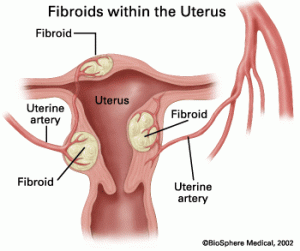
  • Uterine Fibroids:  Non-cancerous (benign) tumors of solid muscle tissue that develop in the uterus
  • Uterine Cysts:  A fluid filled sac found in the pelvis that usually originate in the ovaries
  • Uterine Prolapse:  When the uterus falls or descents from its normal position into the vaginal area
  • Endometriosis: A condition where the cells from the lining of the uterus grow in other areas of the body
  • Cervical Cancer: A disease that forms when cancerous tumors develop and grow in the cervix
  • Uterine Cancer:  A disease that forms when cancerous tumors develop and grow in the uterus
  • Menorrhagia:  Very heavy, abnormal menstrual bleeding
  • Dysmenorrhea:  Very painful periods, excessive menstrual cramping and pelvic pain

When a woman has been diagnosed with one of these gynecological conditions, if the symptoms are severe enough, surgery by way of a hysterectomy may be the best recommendation and often yields effective outcomes. A hysterectomy is a surgery in which the uterus is removed. This can be done partially or in full. Today, many gynecologists are turning to a minimally invasive approach to performing a hysterectomy by using the da Vinci robotic surgical system.  While the robotic surgery technique is still considered relatively new, it is becoming a popular alternative for women throughout the Dallas, TX area as they contemplate the right hysterectomy approach to take.

Robotic surgery has been effective in the treating conditions that cause uterine fibroids, uterine cysts, endometriosis, and other gynecological symptoms.  According to Dr. Murray Fox, a Dallas, TX gynecologist and an early robotic surgery pioneer, “Increasing numbers of women are choosing this approach when faced with a myomectomy (removal of/treatment for uterine fibroids) or hysterectomy (the full or partial removal of the uterus), for example. Robotic surgery continues to result in excellent clinical outcomes, while offering patients an overall easier recovery period.”

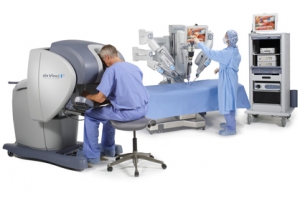
The technology of the da Vinci robotic surgical system uses very tiny incisions allowing surgeons to use miniature instruments and a 3D camera and microscope to view the inside of the uterus and operate with precise movements.  While the arm of the robot does the actual movement, the surgeon is responsible for controlling and directing these moves with absolute accuracy and precision. The approach leaves minimal scarring and reduces the loss of blood, pain, and overall trauma that historically accompanies an open hysterectomy.

Not all gynecological practices in the Dallas, Texas area have adopted the robotic surgery approach. Despite the revolutionary advancement, it is a big investment with a large learning curve. The gynecologists with the Women’s Specialists of Plano state, “It will only be a matter of time until the robotic way is the only way.  We have seen the difference it has made in the hundreds of patients that have walked through the doors of our North Dallas practice. It is revolutionary to say the least.”

To learn more about the da Vinci Robotic Surgery, please visit the Women’s Specialists of Plano, a board-certified group of Dallas, TX gynecologists, at: http://www.obgynplano.com/dallas-frisco-allen/minimally-invasive/robotic-surgery/.

Patients Across North Texas Choosing Robotic Surgery to Treat Common Gynecological Problems and Disorders

Plano, Texas Gynecologist Group Pioneers in Performing the da Vinci Robotic Surgery

The Women’s Specialists of Plano offer the robotic hysterectomy and robotic myomectomy as treatment for uterine fibroids and many other gynecological conditions

Every woman will experience a gynecological problem at one time or another in her life. Two of the most common gynecologic symptoms that women experience include pelvic pain and excessive or irregular menstrual bleeding. While it is common for women to have pelvic pain and menstrual bleeding during their normal menstrual cycle, it is not common to have pain and bleeding so severe that it disrupts normal activities of life.

According to the Women’s Specialists of Plano, a group of gynecologists in North Dallas, while it is common for women to have bleeding and pain associated with the normal period, more acute symptoms such as ongoing pelvic pressure, severe cramps, abdominal tenderness, pain during urination or intercourse, and heavy, ongoing bleeding, usually signals an underlying problem

The symptoms listed above can occur alone, or in combination with each other.  Most often, these symptoms may indicate:

  • Uterine Fibroids
  • Uterine Cysts
  • Uterine Prolapse
  • Endometriosis
  • Cervical Cancer
  • Menorrhagia

When a woman has been diagnosed with a gynecological condition, medication and conservative treatment (for uterine fibroids as an example) are usually recommended first. When medication and non-invasive procedures are unable to relieve symptoms, surgery is often the next step and has proven to be effective in eliminating a range of gynecologic conditions.

Traditionally, open surgery using a large incision has been the standard approach to many gynecological procedures. Open gynecological surgery often leads to a longer recovery process and it is common for women to have increased pain and larger scars. Today, many surgeons are turning to a minimally invasive gynecology surgery by choosing the da Vinci Surgical System. Robotic surgery has been effective in the treatment for uterine fibroids, uterine cysts, and other conditions. Many women are choosing this new approach when faced with a myomectomy (the removal of uterine fibroids) and hysterectomy (the full or partial removal of the uterus).

For complex hysterectomies and other gynecologic procedures such as the myomectomy, robot-assisted surgery using the da Vinci robotic surgery system has proven to be effective. The technology uses very tiny incisions allowing surgeons to use miniature instruments and with a 3D camera and microscope, operate with precise control and movement.  The approach leaves minimal scarring and reduces the loss of blood, pain, and overall trauma that historically accompanies a hysterectomy.  Robotic surgery is growing in popularity and continues to result in excellent clinical outcomes.

Treatment for uterine fibroids and other gynecological conditions is made easier using the robotic surgery system.  If you are considering having a hysterectomy, discuss all of the options with your doctor.  A robotic hysterectomy might be a viable choice to treat your condition.

Not all gynecological practices have adopted the da Vinci robotic surgery and robotic hysterectomy approach. Despite the revolutionary advancement, it is a big investment with a large learning curve. The Women’s Specialists of Plano are pioneers using the system.  According to the physicians that make up this practice, “It will only be a matter of time until the robotic way is the only way.  We have seen the difference it has made in hundreds of patients that walk through the doors of our Plano, Texas practice. It is revolutionary to say the least.”

Uterine Fibroid Tumors | Treatment of Uterine Cysts | Plano, Dallas, Richardson

The article below was written by Kristy Theis, Medical Content Editor for eMedical Media in Dallas, TX.  It was featured on Hubpages May 12, 2010 and written on behalf of the Women’s Specialists of Plano.

“I Have Uterine Fibroids.  Should I be concerned?”

The doctors that make up the Women’s Specialists of Plano (972.379.2416) see their fair share of uterine fibroids weekly at their North Texas OBGYN office. Uterine fibroid tumors are one of the most common gynecological conditions affecting American women today—in fact, this year alone, almost 1 in 4 will be diagnosed with these benign uterine tumors.  While the majority of uterine fibroid tumors are non-cancerous, there is the incidence of malignancy (cancer) in about 1 in 10,000—making fibroids a worrisome diagnosis for thousands of women.

Not too long ago, most American women were sent down the road of having a hysterectomy when diagnosed with uterine fibroids.  I recently interviewed a group of Plano, Texas-based gynecologists—as well as some of their patients—and was pleasantly surprised to learn that there are in fact several options for patients suffering from uterine fibroids.

Fibroids are tumors that develop in the uterus, most often, affecting women over the age of 30 and still in childbearing years. They can be very small, exist as one or in groupings, can be slow or fast growing, and for many, symptoms will be almost non-existent. For many women, on-going and at times continuous cramping, bloating, constipation, heavy bleeding and a feeling of pressure and pain in the uterus can exist.  For women with a personal or family history of cancer, knowing that these tumors exist within the uterus can be troublesome making the treatment of uterine cysts a very important decision for them.

When I met with Patricia, a patient of Dr. Murray Fox, a physician with the Women’s Specialists of Plano practice, she described symptoms that sounded more like a pregnancy than a uterine fibroid.  Her non-cancerous uterine tumors presented themselves years earlier and over time began to grow until the end result was a cantaloupe size tumor.  With a growth so large, she decided to have a full hysterectomy because once the tumor was removed, much of her uterus would have to be removed with it. Since Patricia was past her child-bearing years, a hysterectomy was an acceptable route to take.

According to Dr. Jules Monier, a gynecologist with Women’s Specialists, most women will be diagnosed in the earlier stages through routine pelvic exams.

“We are able to diagnose uterine fibroids early on in most cases and monitor them with each patient.  During this time, conservative treatment of uterine cysts can be provided.  It’s important for women to be cognitive of their symptoms and pay attention to what their body is telling them so that a more aggressive treatment option can be considered if necessary.  No woman should be expected to endure the harsher symptoms that can come along with uterine fibroids.”

The exact causes of fibroid tumors are unknown. The Women’s Specialists of Plano experts agree that treatment of uterine cysts is not necessary with uterine fibroids unless at least one of the following conditions are occurring:

  • The uterine fibroid is greater in size than a 12-week pregnancy
  • The uterine fibroid(s) is growing
  • The uterine fibroid(s) is causing bleeding
  • The uterine fibroid(s) is causing pain
  • The uterine fibroid(s) is associated with pregnancy loss

Treatment options available today are vastly different than years ago.  “Before our patients have to consider a hysterectomy for their uterine fibroids, they do have other treatment options, that in most cases, are successful.  Uterine artery embolization and myomectomy procedures are highly effective treatment options and are generally recommended before a hysterectomy,” Says Dr. Daryl Greebon, a Plano, Texas-based OBGYN.

During a uterine artery embolization procedure, physicians use an x-ray camera to inject small particles through a catheter directly aimed at the fibroid. These particles block the arteries that provide blood flow and essentially cause the fibroids to shrink.

A myomectomy is a surgical procedure where the fibroid tumors are surgically removed.  This procedure can be done with an open incision or using a more minimally-invasive technique such as the robotic myomectomy. The robotic method reduces the side effects of the surgery and overall recovery.  A myomectomy, in general, is considered one of the only surgical treatment options that preserve fertility.

In the procedures mentioned above, a large majority of women experience relief with their symptoms.

Robin is another patient of Women’s Specialists I interviewed and one who had a dramatically different outcome than my earlier subject.  She also battled uterine fibroid tumors since she was in her late 20’s and because she still desired to have children, she opted to have a robotic myomectomy. Dr. Dennis Eisenberg performed the surgery robotically and today, she remains symptom free from her fibroid tumors.  Although the risk of them returning does exist; she has not had any real significant growths or reoccurrences.

Dr. Murray Fox explains, “Uterine fibroid tumors can affect the quality of life.  I have had young women who are afraid to go to their places of business for fear they will soak through their clothes due to heavy bleeding caused by fibroids, and others who have experienced weight gain in the abdominal area because of fast growing and oversized tumors. The question I go over with my patients first is should the fibroid tumors be treated?  If the answer is yes, we discuss how.”

It is extremely important to talk to your gynecologist, get all of the facts revolving around your specific uterine fibroid tumors and review all of your options to help you decide the best outcome for your particular situation, future desires and current lifestyle.

About the writer:

Kristy Theis is the Medical Content Editor for eMedical Media and is a Dallas-based freelance communications writer.

The gynecologists and patients of the Women’s Specialists of Plano contributed to this article.Visit them on the web at www.obgynplano.com.

2010 Medical Mission to Guatemala | Gynecologic Surgery | Dr. Daryl Greebon and Dr. Murray Fox

Dr. Murray Fox, a Plano gynecologist, and Dr. Daryl Greebon, a Plano OBGYN, of Women’s Specialists of Plano have joined the Faith in Practice medical mission team currently in Guatemala. Dr. Fox and Dr. Greebon are medical mission veterans and find the experience incredibly rewarding. Dr. Murray Fox and Dr. Daryl Greebon will volunteer their surgical expertise to poor Guatemalan women in need of gynecologic surgery. The surgeries they perform will include removal of uterine fibroids, hysterectomy and vaginal reconstruction.

Faith in Practice’s mission is to improve the physical, spiritual, and economic conditions of Guatemalan’s poor through short-term surgical, medical and dental mission trips and health-related educational programs

The large FIP team of surgeons, anesthesiologists, nurses, administrators, clergy, translators, oral surgeons, dental hygienists, and a photojournalist will travel to Reutealeahu, Guatemala from February 26, 2010 through March 7, 2010. The team will provide short-term surgical, medical and dental care. Prior to the mission, the team gathers all the supplies that will be required for performing surgery and post-operative care. Each team member typically brings 2 trunks of medical supplies. In total, 86 trunks arrived in Guatemala for this mission.

At the beginning of the trip, the FIP team will assess all surgery candidates and prepare a surgical schedule. The remainder of the week will be spent in surgery and providing after care.

To follow Dr. Fox and Dr. Greebon while they are on their medical mission, a Facebook Fan Page has been set up, Faith In Practice-Greebon Team 244.

Robotic Radical Hysterectomy | Daryl Greebon MD | North Texas Robotic Surgeon

In an article for Women’s Health Quarterly produced for Baylor Plano, North Texas Robotic Surgeon Dr. Daryl Greebon MD explains how a radical hysterectomy performed with da Vinci Robotic Surgery typically reduces scarring, significantly decreases recovery time and improves overall results.

(To download this article, click on below title and use “Get File”.)
View more PDF documents from obgynplano.

Understanding Uterine Fibroids | Dr. Daryl Greebon MD | Gynecologist Plano

Understanding Uterine Fibroids

Author: Dr Daryl Greebon
Understanding Uterine Fibroids

Many women experience these non-cancerous tumors, which can require hysterectomies

A lot of women wonder just exactly what uterine fibroids are. They’re usually non-cancerous tumors that develop within the uterus, and 15-20 percent of women in their reproductive years and 30-40 percent of women older than 30 may suffer from uterine fibroids.

Why should women know about fibroids?
Uterine fibroids are the most prevalent pelvic tumor, but the cause of uterine fibroid tumors is unknown. Not all women with fibroids experience symptoms; however some women ache and have significant menstrual bleeding. In addition, fibroids can place pressure on the bladder, triggering frequent urination.

Fibroids may grow as a single growth or in groups. Fibroids vary in size from very small to eight inches in diameter. The growth of a fibroid typically depends on the hormone estrogen. Once a woman develops a fibroid, the fibroid usually continues to grow throughout her menstruation years.

Women who do not experience symptoms associated with their fibroids may not require treatment. Fibroids may even shrink after menopause, but if heavy bleeding or pain occurs, a hysterectomy may be required. Uterine fibroids are the main reason hysterectomies are performed.

What is a hysterectomy?
A hysterectomy involves surgically removing the uterus, and sometimes the cervix and/or ovaries and fallopian tubes are also removed.
According to the Centers for Disease Control and Prevention, after cesarean section, hysterectomy is the second most frequently performed major surgical procedure for women of reproductive age in the United States. Approximately 600,000 hysterectomies are performed annually in the U.S., and an estimated 20 million U.S. women have had a hysterectomy.

Although some women are wary of having surgery to relieve symptoms because of the down time they may experience, new technology is available that enables the removal of uterine fibroids and hysterectomies to be performed less invasively, leading to shorter hospital stays. For hysterectomies that may be difficult to perform as a vaginal procedure and would otherwise require an abdominal hysterectomy, the “da Vinci® Surgical System” offers an alternative.

This new robotic technology offers numerous potential benefits over traditional surgery, including less pain and scarring, less risk of infection, and faster recovery. It also may decrease the risk of blood loss that can occur during a hysterectomy. This new technology is available to Collin County and other area residents at Baylor Regional Medical Center at Plano, located near President George Bush Turnpike and Preston Road.

About the Author:

A member of the Baylor Regional Medical Center at Plano medical staff, Daryl Greebon, M.D., gynecologist, graduated from the University of Texas Southwestern Medical School. He went on to serve his internship and residency at the University of Pittsburgh Medical Center. Dr. Greebon is a board certified OBGYN practicing with Women’s Specialists of Plano. www.obgynplano.com

Article Source: ArticlesBase.comUnderstanding Uterine Fibroids